What Type of Mess Are You Actually Dealing With?
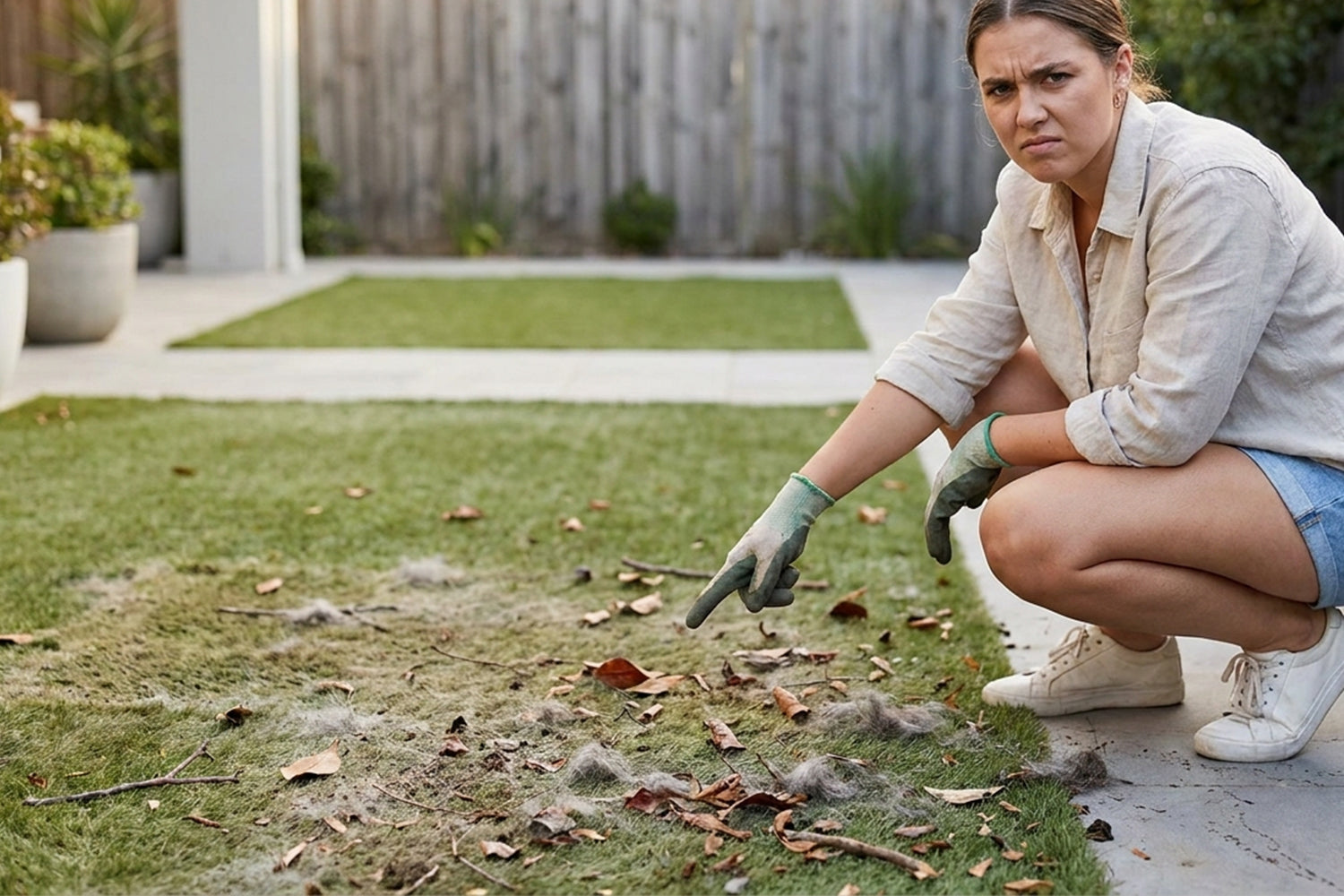
Before you buy anything, identify the problem. The wrong cleaner wastes money and time.
- General dirt and dust — accumulates on the surface from foot traffic, pollen, and weather. A rinse handles most of it.
- Pet urine odour — the #1 complaint from dog owners. Urine soaks into the infill and backing where surface cleaning can't reach it.
- Visible stains — food, oil, mud, organic matter. Needs a targeted spot cleaner or diluted mild detergent.
- Bacterial odour without obvious cause — heat, moisture, and organic debris combine in the infill layer. Requires a deeper clean — both chemical and mechanical.
- General disinfection — sports fields, pet play areas, high-traffic zones. Needs a broad-spectrum disinfectant, not just a deodoriser.
Knowing this upfront means you don't spend $40 on an enzyme product when a $3 hose-down would have done the job.
Enzyme Cleaners: The Go-To for Pet Urine
Enzyme cleaners are the most widely recommended product for artificial turf — and for good reason. They contain live bacteria and enzymes that break down the uric acid compounds in dog urine. That's the smell source. Surface cleaning masks it. Enzyme cleaners eliminate it.
How they work: When you apply an enzyme cleaner to turf, the live cultures consume the organic waste compounds. Given enough contact time — usually 10 to 15 minutes — they break down uric acid into carbon dioxide and water. No uric acid, no smell.
When enzyme cleaners work well:
- Routine maintenance in areas where dogs urinate regularly
- Moderate pet use, one or two dogs
- Cooler climates where the cleaner has time to activate before drying
When enzyme cleaners fall short:
- Heavy, concentrated pet use — the bacterial load can overwhelm the enzyme dose
- Hot climates — high temperatures kill the live cultures before they fully activate
- Infill that's heavily contaminated — the enzyme can't penetrate deep enough
Application: Remove solid waste first. Rinse the area lightly. Apply enzyme cleaner, let it dwell for 10–15 minutes, then rinse thoroughly. Weekly application in high-use dog areas is a reasonable baseline.
Top options: TurFresh BioS+, Simple Green Outdoor Odor Eliminator, and Nature's Pure Edge are widely used across the US market. Look for formulas specifically labelled for synthetic turf — general pet carpet cleaners often contain surfactants that leave residue on turf fibres.
Oxygenated Cleaners: When Enzyme Products Stop Working
If your enzyme cleaner isn't cutting it — particularly in summer heat or with heavy dog traffic — switch to an oxygenated cleaner.
Oxygenated cleaners (typically hydrogen peroxide-based or oxygen bleach formulations) work through oxidation, not biological activity. That means heat doesn't deactivate them. They break down odour compounds, kill bacteria, and tackle organic staining in one step.
When oxygenated cleaners outperform enzymes:
- Summer months when turf surface temperatures exceed 100°F
- Multiple dogs using the same zone
- Persistent odour that returns within 48 hours of enzyme treatment
- Turf that hasn't had a deep clean in months
Caution: Oxygenated cleaners are stronger. Always dilute to manufacturer spec. Rinse thoroughly after application to avoid residue that could irritate pets. OxyTurf is a well-known turf-specific oxygenated formula — formulated to be safe on synthetic grass fibres and drainage systems.
DIY Cleaners: What Actually Works and What Doesn't
Not every cleaning job needs a specialist product. For routine maintenance between deeper cleans, a few household options do the job.
White vinegar and water (1:1 ratio): A mild acid that neutralises surface odours and acts as a basic disinfectant. Works well for light maintenance and after minor accidents. Spray on, let sit 5 minutes, rinse off. Don't use undiluted — it's unnecessary and wastes product.
Baking soda: An absorbing deodoriser. Sprinkle on damp turf, leave for 15 minutes, rinse. Best used as a short-term fix between proper cleans, not a substitute for enzyme treatment in high-use dog areas.
Dish soap (mild, diluted): Effective for removing surface stains — oil, food, mud. A few drops in a litre of warm water, scrub with a soft brush, rinse clean. Avoid anything with bleach or ammonia. Bleach degrades turf fibres over time. Ammonia mimics the smell of urine, which tells your dog to urinate in the same spot again.
What doesn't work: Bleach-based cleaners. They damage turf fibres, harm drainage systems, and aren't safe around pets. Skip them entirely.
General Surface Cleaners and Disinfectants
For turf in high-traffic areas — kids' play zones, sports surfaces, shared pet spaces — a broad-spectrum disinfectant that kills bacteria and viruses is worth adding to your routine.
Look for pet-safe, turf-compatible formulations. Wysiwash is a well-regarded option that uses chlorine-based chemistry at concentrations safe for synthetic turf and animals. It eliminates bacteria, viruses, and odour-causing microorganisms in one application.
Apply monthly on residential pet turf. For sports fields or commercial pet facilities, weekly or after heavy use events is the standard.
The Step Most Cleaners Miss: Mechanical Brushing
Here's what competitor guides consistently skip: liquid cleaners treat the problem after it sets in. Brushing prevents it in the first place — and restores your turf after it's been damaged.
Artificial grass fibres trap debris, compact infill, and create pockets where bacteria breed. When pile lies flat, it holds moisture and organic matter against the backing. That's where the smell comes from.
A power brush lifts the pile, aerates the infill, and expels the debris that liquid cleaners can't reach. Run one regularly and your chemical cleaner does far less work.
The GreenSweep TurfoMax runs at 2,500 RPM with a DuoHelix brush system across a 15-inch cleaning path. It drives bristles deep into the pile to lift flattened fibres and pull compacted material out of the infill layer. The result: turf that looks better, smells cleaner, and holds its structure for longer.
For larger areas or those who prefer cordless, the TurfoVolt delivers 40 minutes of run time on two 4Ah batteries — enough to cover a full residential lawn without stopping.
The mechanical clean doesn't replace your enzyme product. It makes your enzyme product work properly by opening up the pile and infill so the cleaner can actually penetrate to where the odour compounds live.
A Practical Cleaning Schedule
Stop treating every clean as an emergency. Build a routine and you'll rarely need to troubleshoot.
Weekly (pet owners):
- Rinse high-use dog zones with a garden hose
- Remove any solid waste promptly (don't leave it to dry)
- Apply enzyme cleaner to urination areas, let dwell, rinse
Monthly:
- Full surface rinse
- Apply enzyme or oxygenated cleaner across all turf
- Power brush the entire surface to lift pile and shift debris
Quarterly:
- Deep disinfection with a broad-spectrum turf disinfectant
- Check drainage by pouring water at the usual problem spots — should drain in seconds
- Inspect infill depth; top up if significantly depleted
Annually:
- Full assessment of fibre condition
- Decide if infill replacement is needed
- Professional deep clean for sports fields or large commercial installations
Quick Reference: Which Cleaner for Which Problem?
| Problem | Best Cleaner Type | Notes |
|---|---|---|
| Dog urine odour (regular) | Enzyme cleaner | Apply weekly in dog zones; rinse thoroughly |
| Dog urine odour (persistent, hot climate) | Oxygenated cleaner | More heat-stable than enzymes |
| Surface stains (food, mud, oil) | Mild dish soap + water | Dilute well; always rinse |
| Light odour / routine maintenance | White vinegar + water | 1:1 dilution, 5-min dwell, rinse |
| Bacteria / disinfection | Turf-specific disinfectant | Monthly for pet areas |
| Flat, compacted pile with trapped debris | Power brush | Mechanical — precedes chemical clean |
The Bottom Line
The best artificial grass cleaner isn't a single product. It's a system: the right liquid matched to the problem, applied on a consistent schedule, with a power brush doing the mechanical work that no bottle can replicate.
For pet urine, enzyme cleaners handle everyday maintenance. When heat or heavy use overloads them, oxygenated formulas step in. For routine freshness, vinegar and water plus a monthly hose-down keeps surface grime in check.
And underneath all of it? Regular brushing. It's what keeps your turf in the condition where cleaning products actually work.
Browse the full GreenSweep range at greensweepco.com/collections/all — from the TurfoMax power brush to cordless options for larger lawns. Your turf, your cleaner, your schedule.