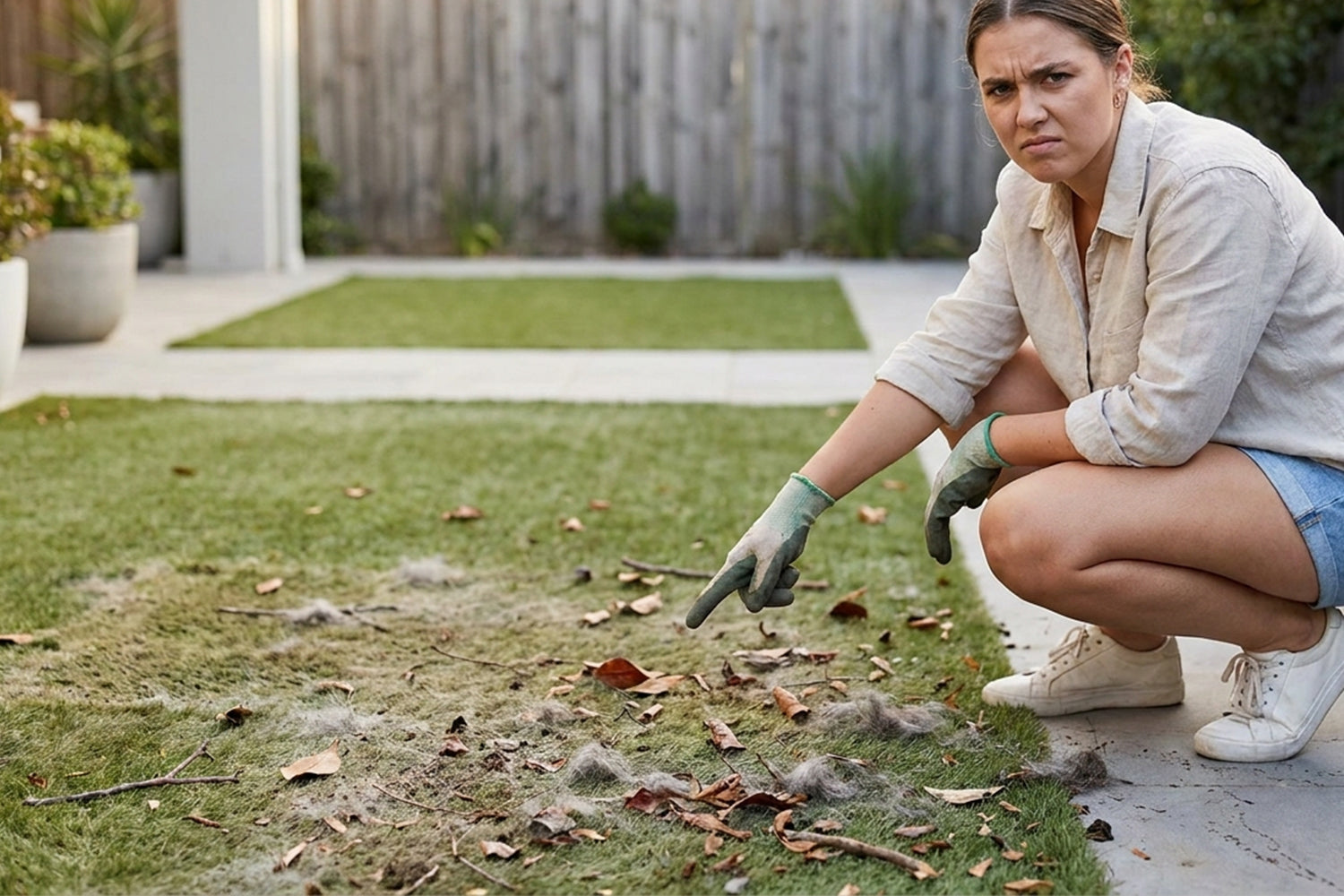
Mud on the paws. Yellow patches from urine. A backyard that looks worse every week. If you have dogs, real grass is a losing battle. Artificial grass for dogs solves all three problems — but only if you choose the right product and keep it clean. This guide covers exactly that: what to look for when buying, what to watch out for, and how to maintain it so it stays fresh for 15+ years.
Is Artificial Grass Safe for Dogs?
Yes — quality artificial turf is safe for dogs. Modern pet turf is made from polyethylene fibres, which are non-toxic and soft underfoot. It won't cause skin irritation and dogs generally adapt to it quickly.
Two things to verify before you buy:
- Lead-free certification. Reputable manufacturers test for heavy metals. Look for products that meet ASTM F2853 standards or carry third-party safety certifications.
- Antimicrobial backing. Some turf products, like those using Microban technology, inhibit bacterial growth in the backing layer — useful in high-use pet areas.
What artificial grass won't do: protect your dog from heat. Synthetic fibres absorb and radiate heat far more than natural grass. On a hot summer day, turf surface temperatures can reach 150°F or more. If you're in a warm climate, stick to shade-tolerant turf placement, rinse the surface before letting your dog out mid-afternoon, and keep water available.
What to Look for When Buying Artificial Grass for Dogs
Not all turf is equal. Here's what actually matters for dog owners:
Drainage Rate
This is the single most important spec. Dog urine needs to pass through the turf quickly — pooling leads to odour, bacteria, and a mess. Look for a drainage rate of at least 30 inches per hour, though 50+ is better for multiple dogs. Perforated backing (holes punched through at regular intervals) is the standard; drainage rates vary based on hole density and size.
Pair the turf with a compacted decomposed granite or crushed stone sub-base — not soil. Soil compacts over time and blocks drainage. Stone lets liquid pass straight through.
Pile Height
For dogs, shorter is better. A pile height of 1 to 1.5 inches is easier to clean, dries faster, and doesn't trap debris. Long, lush pile looks great but gives bacteria more places to hide.
Fibre Type and Density
Polyethylene fibres are the softest option and the right call for pet areas. Polypropylene is cheaper but stiffer — fine for low-traffic decorative areas, not ideal where dogs spend hours. Higher stitch count (stitches per square metre) means more fibres, which means better durability under heavy paws and zoomies.
Infill Choice
Standard rubber crumb infill isn't ideal for dog areas — it traps heat and can harbour bacteria. Better options:
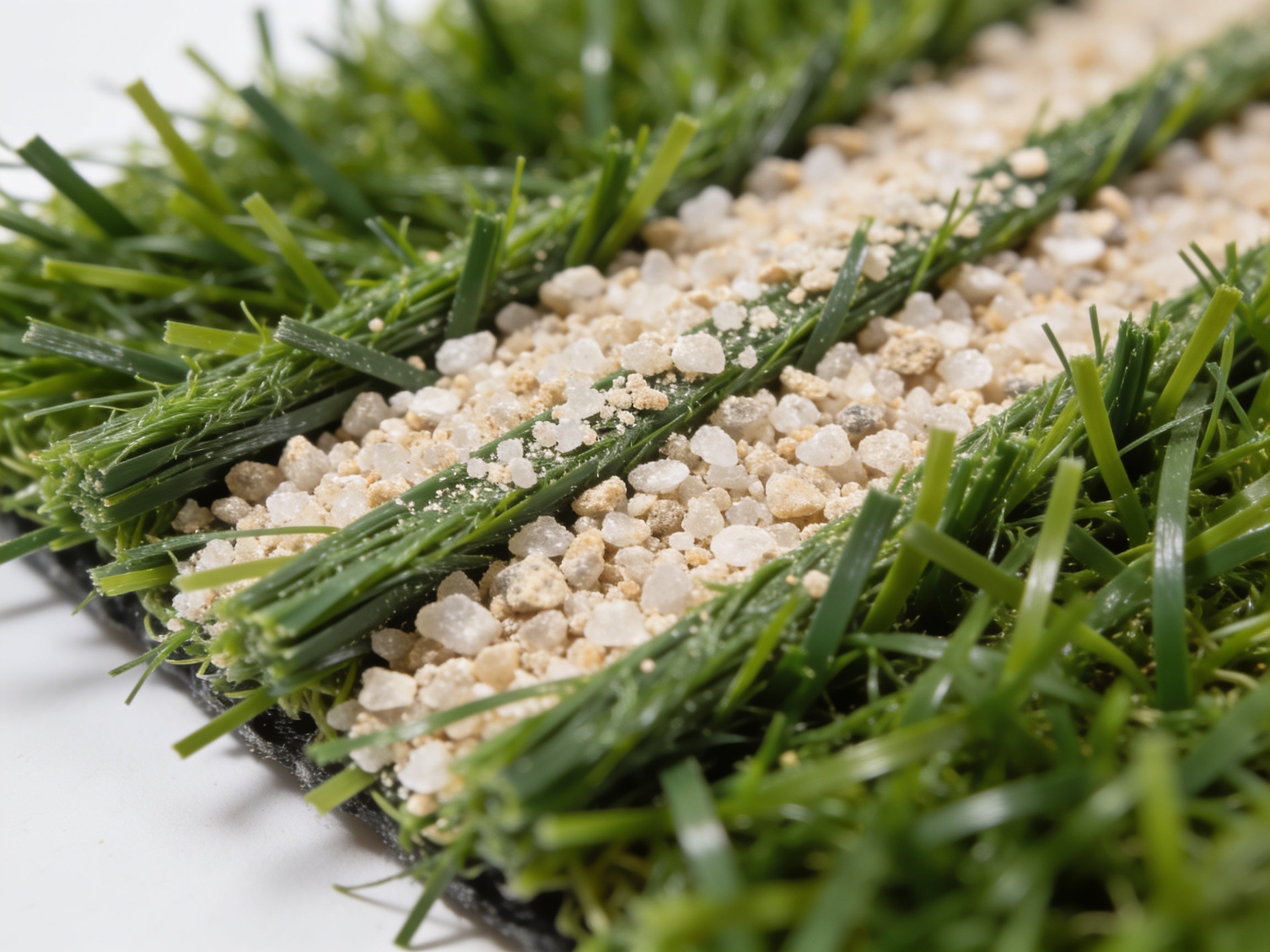
- Silica sand: Cheap, effective, keeps fibres upright
- Zeolite: The best choice for dog turf — it's a natural mineral that actively absorbs ammonia from urine, which is the primary source of that urine smell. Replace annually.
- Organic infill (cork or walnut shell): Cooler than rubber, anti-microbial properties, more expensive
If your turf already has rubber crumb infill, you can top-dress with zeolite to improve odour control without a full replacement.
How to Maintain Artificial Grass with Dogs
This is where most dog owners fall short. Artificial turf doesn't maintain itself. A simple weekly routine keeps it clean, fresh, and lasting the full lifespan.
Weekly: Rinse and Remove Solid Waste
Pick up solid waste immediately — don't let it sit. Hose down the turf thoroughly at least once a week, or daily in high-use pet zones. This dilutes and flushes bacteria before they can establish. Focus on the spots your dog uses most.
A garden hose works. A pressure washer can be used sparingly on areas without infill, but avoid blasting infill — it will displace it.
Monthly: Enzyme Cleaner Treatment
Water alone won't break down urine bacteria. Enzyme cleaners use biological action to digest ammonia compounds and organic matter at the source. Apply diluted enzyme cleaner across the full surface, let it dwell for 10–15 minutes, then rinse off.
How often: monthly at minimum, every two weeks if you have multiple large dogs or notice any odour developing. Don't wait for the smell to become obvious — treat before it builds up.
Monthly: Power Brush the Pile
Dog traffic — especially from energetic breeds — compresses turf fibres. Flat, matted pile is harder to clean, looks worn, and gives bacteria more surface contact. Brushing lifts the pile back upright and aerates the infill layer.
A stiff hand rake works for small areas. For anything over 20–30 square feet, a power brush makes a real difference. The GreenSweep TurfoVolt runs at 2,500 RPM on a 40-minute cordless battery — it cuts through compacted pet turf fast without tearing fibres. The Reviver is a corded option with variable speed control if you prefer consistent power without charging intervals.
Brush against the grain of the fibres, working in sections. You'll see the pile lift immediately. Do this monthly; increase to fortnightly in areas your dog uses as a dedicated toilet zone.
Quarterly: Deep Clean and Inspect
Every three months, run a full deep clean:
- Remove all loose debris with a leaf blower or stiff brush
- Apply enzyme cleaner and let it dwell
- Rinse thoroughly
- Power brush the entire surface
- Check infill levels — top up zeolite or sand where it's depleted
- Inspect seams and edges for lifting
Lifting seams are a common issue in pet areas because moisture and digging dogs work the edges loose. Re-glue or re-nail early before the problem spreads.
Common Problems with Dog Turf (and How to Fix Them)
Persistent urine smell: The culprit is almost always insufficient drainage combined with inadequate cleaning frequency. First, test drainage — pour a bucket of water on the surface and watch how quickly it disappears. If it pools, the sub-base may be compacted. Second, increase enzyme cleaner treatments to twice weekly until the smell clears, then maintain monthly.
Matted, flat pile: Traffic and time compress fibres. Power brush the area thoroughly — a quality brush at 1,300–2,500 RPM will restore the pile in one pass. If specific high-traffic spots stay flat after brushing, the fibres may be permanently deformed. Those sections can be replaced without redoing the whole lawn.
Heat on hot days: Rinse the surface 15–20 minutes before your dog goes out — evaporation cools the fibres. Add shade with a pergola or shade sail over the primary dog area. Lighter-coloured turf also stays cooler than dark green products.
Dog digging at edges: Dogs dig where they can find a loose edge. Secure turf edges with galvanised nails every 4–6 inches and use a bender board edging system to give a firm perimeter. Some dogs will stop once the edge is solid; persistent diggers may need deterrent spray on the edge perimeter.
Artificial Grass vs Real Grass: The Honest Comparison for Dog Owners
| Factor | Artificial Grass | Real Grass |
|---|---|---|
| Urine damage | None — no yellow patches | Kills grass, requires reseeding |
| Mud | None | Significant in wet weather |
| Cleaning | Weekly rinse + monthly enzyme | Daily wear, seasonal repair |
| Heat | Gets hot — needs management | Cooler surface |
| Upfront cost | $5–$20/sq ft installed | $1–$5/sq ft installed |
| Lifespan | 15–20 years | Ongoing maintenance cost |
| Fleas and ticks | Dramatically reduced habitat | Regular tick/flea habitat |
For most dog owners, the trade-offs favour artificial turf once you factor in the true cost of maintaining real grass with active dogs.
The Bottom Line
Artificial grass for dogs works. It eliminates the problems that make real grass frustrating for pet owners — urine damage, mud, patchy growth, and constant repair. But it's not zero-maintenance. A weekly rinse, monthly enzyme treatment, and regular power brushing are what keep it clean and odour-free.
Get the maintenance routine right from day one and your turf will look good and smell clean for years. Browse the full range of GreenSweep turf maintenance tools to find the right power brush for your yard size.