Cheap artificial grass exists on a real spectrum, and knowing where a price sits on that spectrum tells you exactly what you're getting. Installed synthetic turf runs anywhere from $4 to $12 per square foot, and material-only rolls can dip under $2 per square foot at the bottom of the market. That's not a marketing range — it's the difference between a lawn that looks good for 15 years and one that starts looking rough after two summers. If you're shopping by price alone, you need to know what each dollar actually buys, because the cheapest option on the page is rarely the cheapest option over time.
Why Artificial Grass Prices Range From $1 to $6+ Per Square Foot
Turf pricing isn't random. Every dollar per square foot maps to a measurable spec: yarn material, face weight, backing system, and stitch density. Polyethylene (PE) yarn — the soft, natural-looking fiber used in most residential turf — typically runs $2.50 to $5.50 per square foot installed. Nylon, used where heavy wear is the priority (putting greens, batting cages, high-traffic commercial spaces), runs $5.00 to $8.00 because it holds its shape under repeated compression better than any other fiber.
Face weight is the next lever. That's the ounces of yarn per square yard, and it's driven by pile height, stitch rate, and fiber thickness (measured in dtex). Budget turf sits around 40–50 oz/yd². Mid-range residential lawns run 60–85 oz/yd². Premium and high-traffic turf pushes past 90 oz/yd². More yarn means more material cost, but it also means more fiber standing between your foot and the backing — which is exactly what keeps turf from flattening.
Backing is the third variable, and it's the one budget listings mention least. A basic latex (SBR) backing is the cheapest to produce and holds up fine under moderate residential foot traffic. Polyurethane (PU) backing costs more but resists shrinkage, UV breakdown, and tuft pull-out significantly longer — which matters most in high-heat, high-UV markets across the South and Southwest. When a listing doesn't mention backing type at all, assume it's the cheapest option available.
What You Lose When You Buy the Cheapest Turf
At the bottom of the price range, you're not getting a worse version of the same product — you're getting a different product with the visible attributes stripped out first. Three things go first:
Backing durability. Cheap backing uses thinner primary and secondary layers. Less adhesive, less structural fabric, faster tuft pull-out. Within a couple of seasons, you'll start seeing loose fibers pull free in high-traffic zones — the exact spots your kids and dogs use the most.
Yarn density. Low stitch rate and wide gauge spacing mean fewer fibers standing per square inch. The turf looks fine in a listing photo shot from six feet up. Up close, and especially under foot traffic, it looks patchy and thin because there's simply less material doing the work.
Drainage engineering. Quality turf backing is perforated for a specific drainage rate — ideally above 30 liters per square meter per minute. Bargain-tier backing often skips this spec entirely or under-delivers on it. Combined with thinner infill layers, that means standing water, odor buildup from pet waste, and a surface that takes longer to dry after rain.
None of this shows up in a product photo. It shows up in year two.
Backing, Yarn Density, and Drainage: The Specs That Actually Matter
If you're comparing two rolls of turf at different price points, skip the marketing copy and check three numbers:
- Face weight (oz/yd²): 40–60 oz is fine for low-traffic decorative areas. 60–85 oz is the sweet spot for backyards with regular use. Anything under 40 oz is built for looks, not wear.
- Backing type: Latex/SBR is acceptable for moderate residential traffic and lower budgets. PU is worth the premium if you're in a hot climate, have pets, or expect heavy daily use.
- Drainage rate: Ask for it directly. If a seller can't tell you the perforation rate or drainage spec, that's a signal the backing wasn't engineered with drainage as a priority.
These three specs interact. A high face weight with cheap backing still fails early because the backing can't hold the extra fiber weight in place. A great backing with low face weight looks thin no matter how well it drains. Balance matters more than maxing out any single number.
Where It's Fine to Save Money — and Where It Isn't
Not every square foot of your yard needs premium spec turf, and pretending otherwise wastes money. Here's where cutting cost actually makes sense:
- Low-traffic decorative zones — strips along a fence line, areas around planters, spots nobody walks on. Budget-tier PE turf with basic latex backing does the job.
- Temporary or short-term installs — staging a property for sale, a rental you'll be leaving in two years, a seasonal display.
And here's where it doesn't:
- Pet areas. Drainage and antimicrobial-treated backing aren't optional here — cheap backing plus pet waste is a fast track to persistent odor.
- Play areas and high-traffic paths. Kids and daily foot traffic expose thin yarn density and weak tuft lock within a season.
- Full-sun, high-UV yards. Cheap PE yarn with minimal UV stabilizer fades and stiffens faster under direct Southern or Southwestern sun.
If your yard mixes zones, it's reasonable to spec differently by area — save on the strip nobody touches, spend where the wear actually happens.
The Hidden Cost of Cheap Turf: Faster Wear and More Maintenance
Here's the part cheap-turf sellers don't put in the listing: lower-spec turf demands more maintenance to look acceptable, and the maintenance schedule you'd run on premium turf isn't enough for the budget stuff.
Thinner backing traps debris and pet waste closer to the surface, which means more frequent brushing and rinsing to prevent odor and bacteria buildup. Lower face weight flattens under foot traffic faster, and flattened fiber needs more aggressive grooming to stand back up — a job a basic broom won't do well. Weak drainage means longer dry times after rain, which extends the window where mold and algae can take hold.
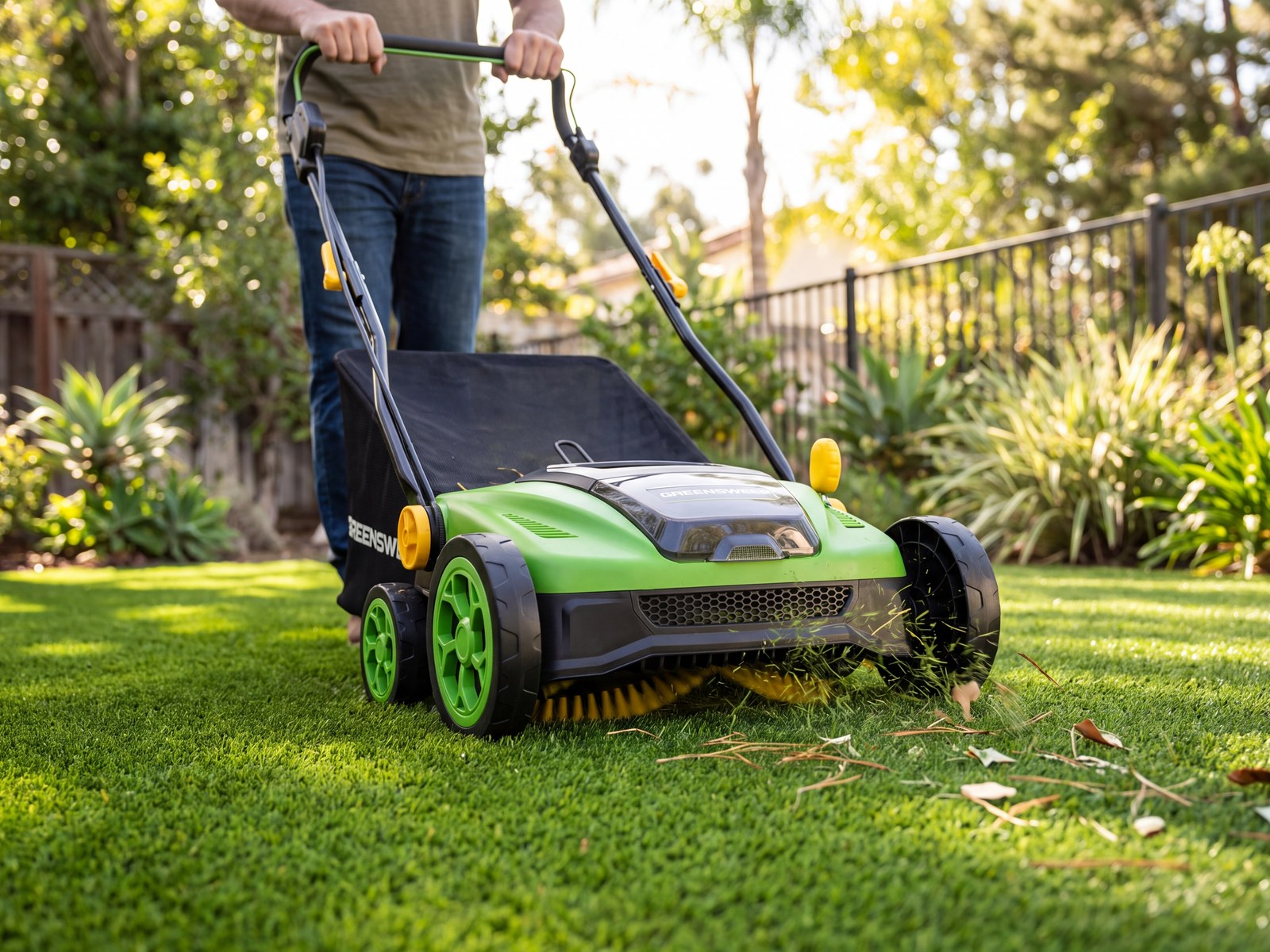
Run the numbers honestly: if a $2/sqft turf needs monthly deep-brushing with a power sweeper to stay presentable, and a $4.50/sqft turf needs it quarterly, the cheaper turf isn't actually cheaper once you factor in your time and equipment wear. A TurfoMax power sweeper's 13-amp motor and DuoHelix brush can restore pile on either grade of turf, but it's working a lot harder — and a lot more often — on turf that was underspec'd from day one.
Getting the Best Value Without Overpaying
The goal isn't buying the most expensive turf on the shelf — it's matching spec to how the space actually gets used. A practical way to shop:
- Map your yard by traffic level. Decorative, moderate, heavy. Spec each zone separately if the project allows it.
- Ask sellers for face weight, backing type, and drainage rate before price. If they can't answer, that's your answer about quality.
- Budget for maintenance equipment alongside the turf. A Reviver corded turf brush at 1,300 RPM keeps mid-range turf looking full between deep cleans, and it costs less than replacing turf that's matted down two years early.
- Treat installed cost per square foot as the real number, not material cost alone. Base prep and drainage work matter as much as the turf itself.
Cheap artificial grass isn't a trap — it's a legitimate option for the right zone in your yard. The trap is buying the cheapest roll for every square foot and expecting premium-grade performance out of budget-grade materials. Spend where the wear happens, save where it doesn't, and keep whatever you install clean with the right gear. Browse GreenSweep's full lineup of turf sweepers and brushes built to keep any grade of artificial grass looking new, longer.