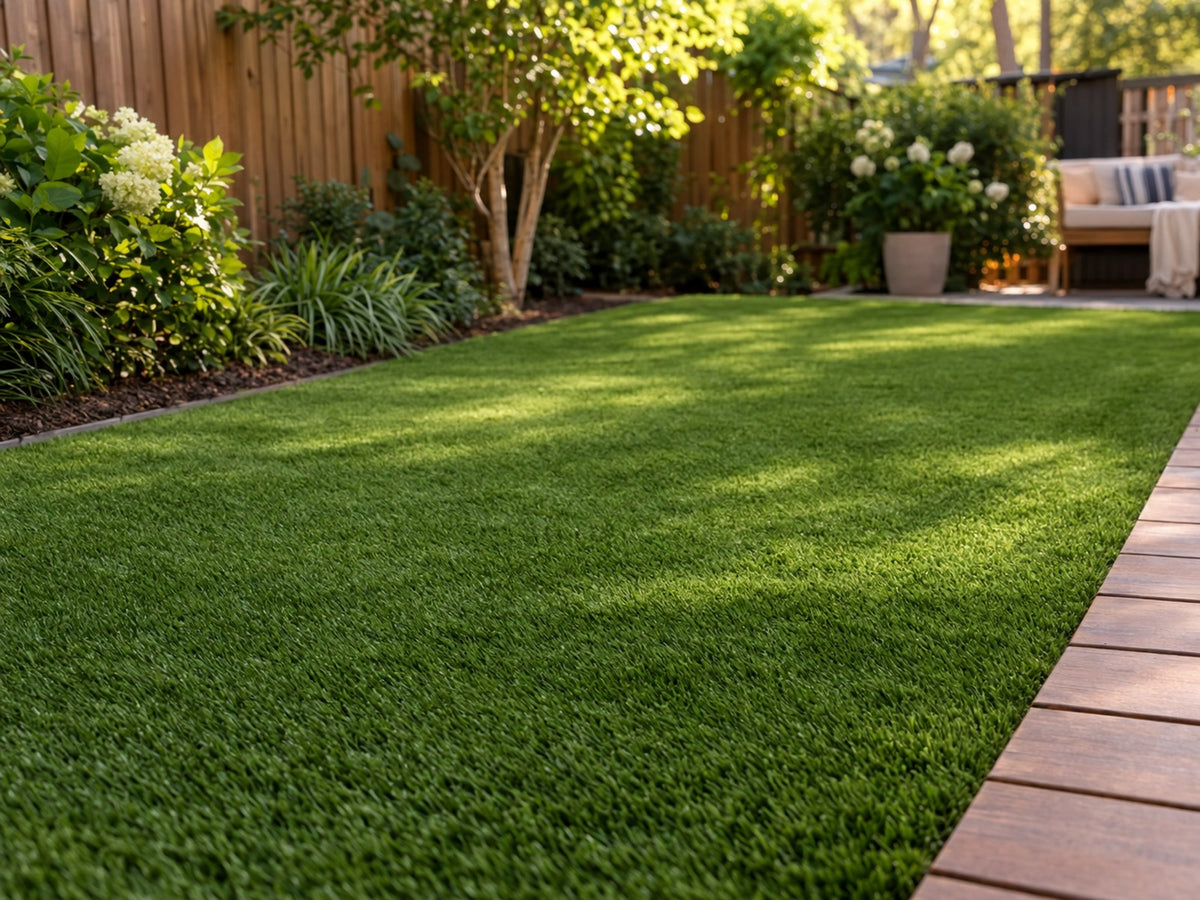
One of the biggest reasons people choose artificial grass is the promise of a low-maintenance garden. No mowing, no mud, no watering, and a lawn that looks green all year round sounds ideal. So it’s no surprise that many homeowners assume artificial turf is completely maintenance free.
But the truth is, artificial grass is low maintenance — not no maintenance.
That doesn’t mean it’s difficult to care for. In fact, keeping turf looking its best is usually quick and easy. But like any outdoor surface, it still needs a little attention to stay clean, fresh, and performing properly.
Why Artificial Turf Still Needs Maintenance
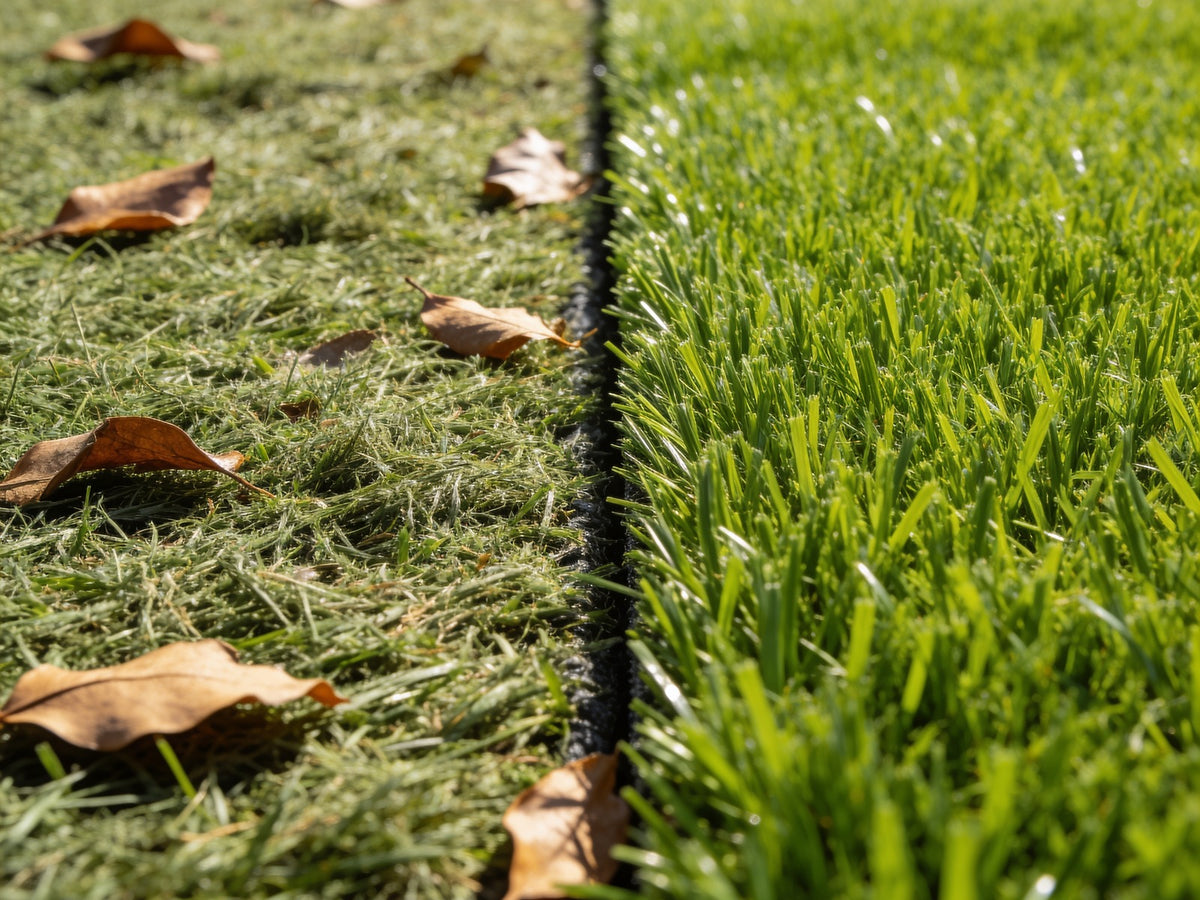
Artificial grass sits outside all year, exposed to the same conditions as a natural lawn. Dust, dirt, fallen leaves, moss, pet hair, food debris, and general garden mess can all build up over time. Even if the surface still looks green from a distance, the pile can become flattened and tired, while debris settles deep into the fibres.
Without occasional upkeep, artificial turf can start to:
-
Look matted and worn
-
Trap dust and dirt
-
Collect leaves and organic debris
-
Develop moss or algae in damp areas
-
Lose its fresh, springy appearance
So while you can forget about mowing and feeding, you can’t ignore it completely.
What “Low Maintenance” Really Means
Artificial turf dramatically reduces the amount of work needed compared with real grass. There’s no cutting, edging every week, reseeding, or dealing with muddy patches. That’s the real benefit.
However, low maintenance still means doing a few simple jobs now and then, such as:
-
Brushing the pile to lift flattened fibres
-
Removing leaves and loose debris
-
Rinsing or cleaning areas when needed
-
Keeping the surface free from build-up
-
Refreshing high-traffic areas
These small tasks help preserve the appearance of the lawn and can extend the life of the turf too.
The Most Common Problem: Flattened Fibres
One of the first things people notice after turf has been down for a while is that it starts to look flat, especially in well-used areas. Garden furniture, foot traffic, pets, and regular use can all press the fibres down over time.
This doesn’t mean the turf is poor quality. It simply means it needs reviving.
Brushing and lifting the pile is one of the most important parts of artificial grass care. It helps restore volume, improves the overall look, and brings tired-looking turf back to life.
Dirt Builds Up More Than You Think
Because artificial grass does not grow or regenerate like natural grass, debris does not disappear on its own. Dust, small leaves, pollen, soil, and airborne dirt can settle into the pile and sit there until removed.
Over time, this can make the lawn look dull and less vibrant. In some cases, it can also affect drainage if too much organic matter is left to build up.
A simple clean every so often makes a big difference. Regular sweeping and brushing keeps the surface clearer and helps prevent deeper build-up.
Pet Owners Need to Do a Little More
Artificial turf is a brilliant option for pet owners because it is durable, tidy, and easy to manage. But if pets use the lawn regularly, extra maintenance is needed to keep it fresh.
That may include removing hair, rinsing the area, and cleaning more frequently to prevent odours or residue from building up. Again, it is still much easier than maintaining natural grass, but it is not completely hands-off.
The Good News: It’s Still Easy
The good news is that artificial turf maintenance is nowhere near as demanding as caring for a real lawn. You are not replacing the hard work of mowing with a new long list of chores. You are simply giving the surface the occasional care it needs to stay in top condition.
With the right tools, the job becomes even easier. A proper turf sweeper or brush can lift the pile, remove debris, and quickly refresh the lawn with far less effort than doing it by hand.
A Better Way to Think About It
Instead of thinking of artificial grass as “no maintenance,” it is better to think of it as minimal maintenance with maximum reward.
You still get all the major benefits people love:
-
A neat and green lawn all year round
-
No mowing or watering
-
Less mess and mud
-
More usable outdoor space
-
Lower ongoing effort than natural grass
But you also accept that to keep it looking its best, a little upkeep goes a long way.
Final Thoughts
So, is artificial turf maintenance free? Not quite.
But it is still one of the easiest and most practical ways to enjoy a smart, tidy, and attractive garden without the constant demands of natural grass. A small amount of regular care will keep it looking cleaner, fuller, and fresher for longer.
If you thought turf was no maintenance, the reality is even better: it is easy maintenance — and that is what keeps it looking great.