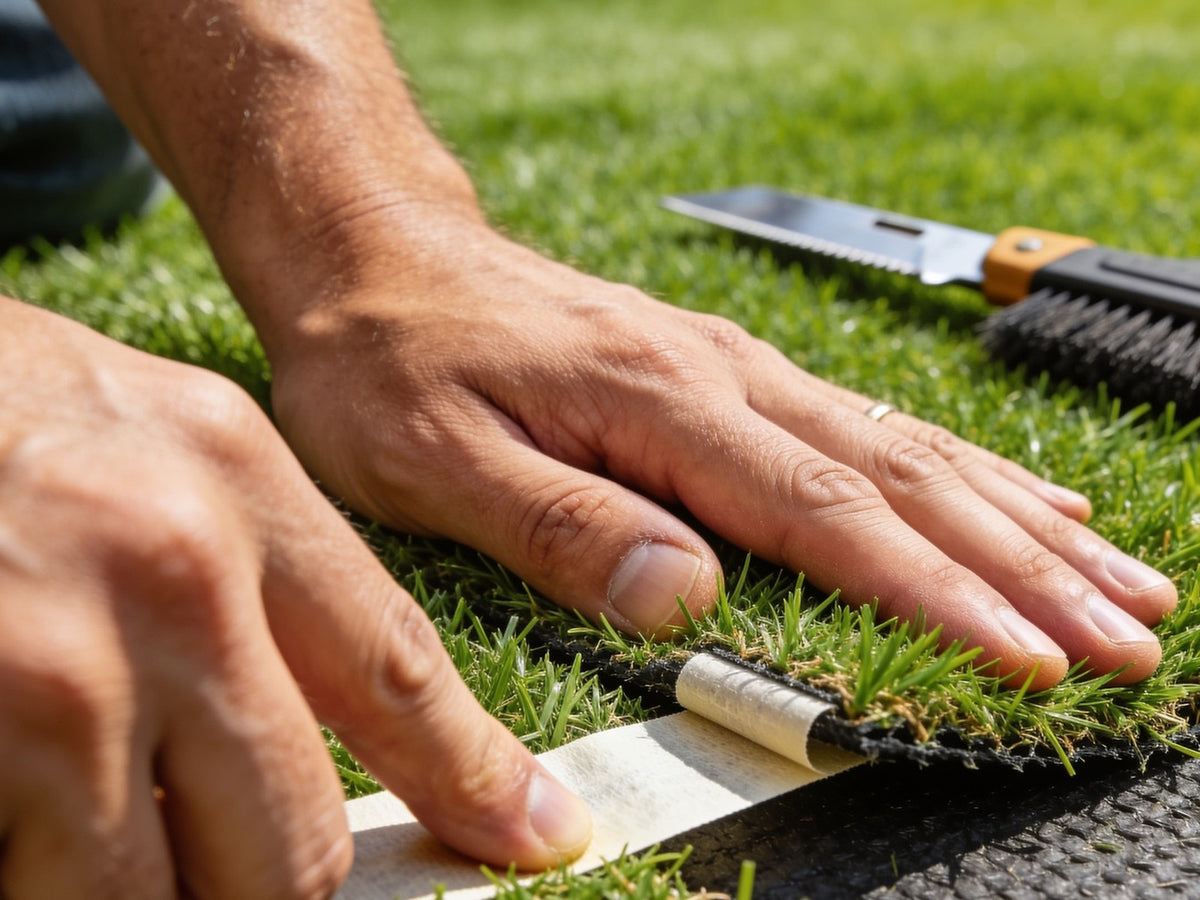
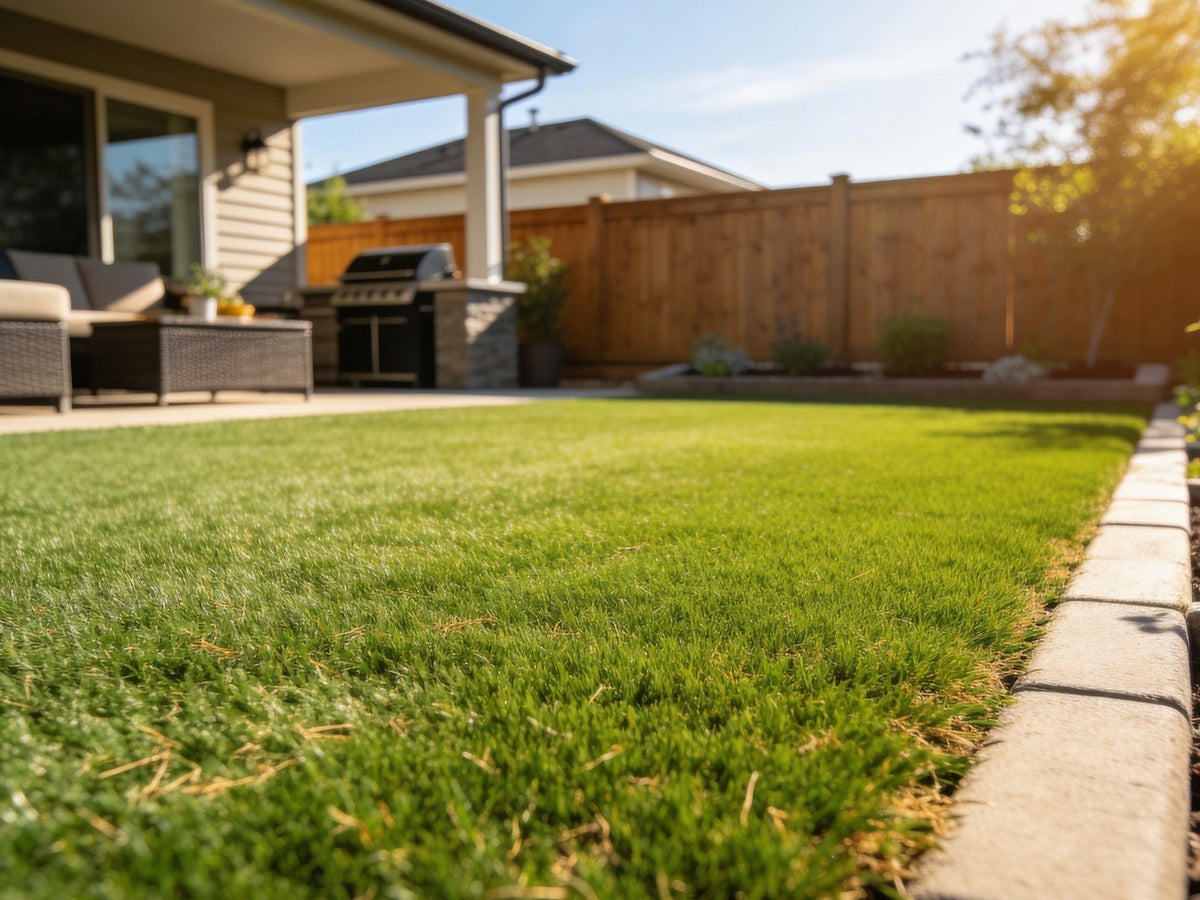
Every “artificial grass vs real grass” comparison online stops at the same lazy line: turf needs zero maintenance. It doesn’t. Turf still needs light, regular upkeep — brushing, rinsing, occasional infill top-offs — and skipping it is how a $10,000 lawn starts looking like a stained gym mat by year three. Real grass, on the other hand, comes with a maintenance bill you pay every single week: mowing, watering, fertilizing, aerating, reseeding. The real question isn’t which lawn needs zero work. It’s which one costs less, lasts longer, and actually fits how you use your yard. Here’s the honest math, line by line.
Upfront Cost: Artificial Turf vs. Sod, Side by Side
Real grass wins the first invoice, no contest. Sod runs roughly $0.30–$0.80 per square foot in materials; a 1,000-square-foot lawn lands around $1,000–$2,000 installed with prep and labor. Seed is cheaper still.
Artificial turf costs more going in — typically $8–$20 per square foot installed, so $8,000–$20,000 for that same 1,000 square feet, depending on base prep, infill type, and pile height. That gap is real, and it’s the number every “turf is a scam” comment on Reddit points to.
But upfront cost is only half the invoice. The second half is what you pay every year after move-in day, and that’s where the comparison flips.
The “Zero Maintenance” Myth: What Artificial Turf Still Needs
Turf doesn’t need mowing, watering, or fertilizing. It does need a maintenance routine, and pretending otherwise is why so many turf lawns look tired within two seasons.
Fibers get matted down by foot traffic, furniture legs, and dog play. Infill compacts and migrates, which kills drainage and makes the surface feel hard instead of springy. Debris — leaves, pollen, pet hair — builds up in the pile and holds odor and moisture against the backing.
The fix is mechanical brushing, not a garden rake. A power brush like the TurfoMax — 13-amp motor, dual counter-rotating DuoHelix brushes, 15-inch width, self-propelled — lifts matted fibers, redistributes infill evenly, and pulls debris out of the base in one pass. For smaller patios or side yards, the Reviver (corded, 1,300 RPM, variable speed, 12-inch width) does the same job at a lighter footprint. Budget 15–20 minutes every two to three weeks for a residential lawn, plus an occasional infill top-off every 2–3 years. That’s real maintenance — just a fraction of what real grass demands.
Water, Fertilizer, and Mowing Costs You Eliminate
This is where turf earns its upfront price back. A 1,000-square-foot lawn in most US climates drinks 15,000–24,000+ gallons of water a year to stay green — more in hot, dry regions with longer irrigation seasons. At rising municipal water rates, that’s a real recurring line item, not a rounding error.
Add mowing (30–40 cuts a year if you DIY, $40–$80 per visit if you hire it out), fertilizer and weed control (two to four applications annually), aeration, overseeding, and the occasional pest treatment. Total real-grass upkeep typically runs $500–$1,500 per year for a standard residential lawn — before you factor in your own mowing time.
Artificial turf’s annual cost sits closer to $50–$200 a year: brushing supplies, occasional rinsing, and periodic infill. Multiply the gap by ten years and turf’s higher install cost starts closing fast — often breaking even in the five-to-seven-year range, faster in hot, dry climates where water costs the most.
Run the same math in a wetter, cheaper-water region and the timeline stretches — sometimes past ten years — because the annual savings shrink. That’s the piece most “turf vs grass” articles skip entirely: your zip code changes the answer more than the product does.
Durability and Lifespan: Which One Lasts Longer?
Quality artificial turf is built to last 15–25 years with the maintenance routine above. It doesn’t go dormant in a drought, doesn’t die in a hard freeze, and doesn’t get chewed up by grubs or fungus. High-traffic zones — dog runs, play areas, pool decks — hold their shape far longer than sod ever will under the same abuse.
Real grass has no fixed lifespan; it’s a living system you’re constantly repairing. Drought stress, foot-traffic wear patterns, disease, and pests mean most lawns need reseeding or re-sodding in patches every few years, and a full renovation isn’t unusual after a decade of hard use. Turf’s durability is the strongest argument for households with kids, dogs, or a yard that gets used hard year-round.
The catch: turf’s 15–25-year lifespan assumes you actually maintain it. Skip the brushing routine and let infill compact for a few years, and you’ll see premature wear — flattened traffic lanes, poor drainage, a hard-packed feel — well before the fibers themselves give out. The material outlasts most homeowners’ patience with it; the maintenance is what closes that gap.
Environmental Trade-Offs Worth Knowing
Neither lawn is the clear environmental winner — the trade-offs just move. Real grass captures carbon, cools the air through evapotranspiration, and supports pollinators and soil biology. It also drinks thousands of gallons of water per season and, depending on your habits, adds fertilizer and pesticide runoff to the mix.
Artificial turf eliminates that water draw and the chemical inputs entirely, but it’s a manufactured plastic product with an end-of-life disposal question, and surface temperatures can run 40–80°F hotter than natural grass on a sunny afternoon — a real consideration for bare feet and pets in peak summer.
If you’re in a drought-prone region paying premium water rates, turf’s water savings likely outweigh the trade-offs. If water is cheap where you live and biodiversity matters more to you, real grass holds its ground.
Quality matters here too. Turf made with polyurethane backing drains faster and resists odor buildup better than cheaper latex-backed products — a meaningful difference if pets use the yard. And on heat: strategic shade, lighter-colored infill, and a quick rinse before peak-sun hours knock several degrees off surface temperature, closing part of the gap with natural grass on the hottest days.
Which Lawn Wins for Your Yard? A Decision Framework
Skip the internet debate and run your own numbers:
- High water costs or drought restrictions? Turf usually wins on 10-year cost.
- Heavy use from kids, dogs, or entertaining? Turf’s durability beats grass’s wear-and-tear cycle.
- Low water rates and you enjoy lawn care? Real grass keeps the lower upfront cost and the living-lawn feel.
- Shade, poor soil, or a slope that won’t grow grass well? Turf sidesteps the growing problem entirely.
- Tight budget right now, flexible on long-term cost? Sod’s lower install price wins today; revisit turf later.
- Renting or planning to move in a few years? Real grass’s lower upfront cost usually makes more sense than an investment you won’t be around to break even on.
- Allergies or pollen sensitivity in the household? Turf removes a major seasonal irritant that no amount of lawn care eliminates.
Whichever way you land, don’t skip the maintenance question. A dialed-in brushing and infill routine is what separates a turf lawn that still looks new at year ten from one that looks tired at year three. Walk your yard, note the wear zones, sun exposure, and drainage patterns, and you’ll usually already know which side of this list you’re on before you finish reading it.
The Bottom Line
“Artificial grass vs real grass” isn’t really a cost debate — it’s a timing debate. Real grass costs less on day one and more every year after. Artificial turf costs more on day one and pays that difference back through eliminated water, mowing, and fertilizer bills, usually within five to seven years. Durability and your climate tip the scale from there.
If you’re going turf, don’t cut the maintenance corner that causes most of the buyer’s remorse you’ll read about online. A proper brushing routine with the right equipment is the difference between a ten-year investment and a five-year replacement. Ten minutes with a power brush every couple of weeks beats a full re-infill job — or worse, a full turf replacement — every single time.
Shop the full GreenSweep lineup and keep your turf looking as good as the day it went in.