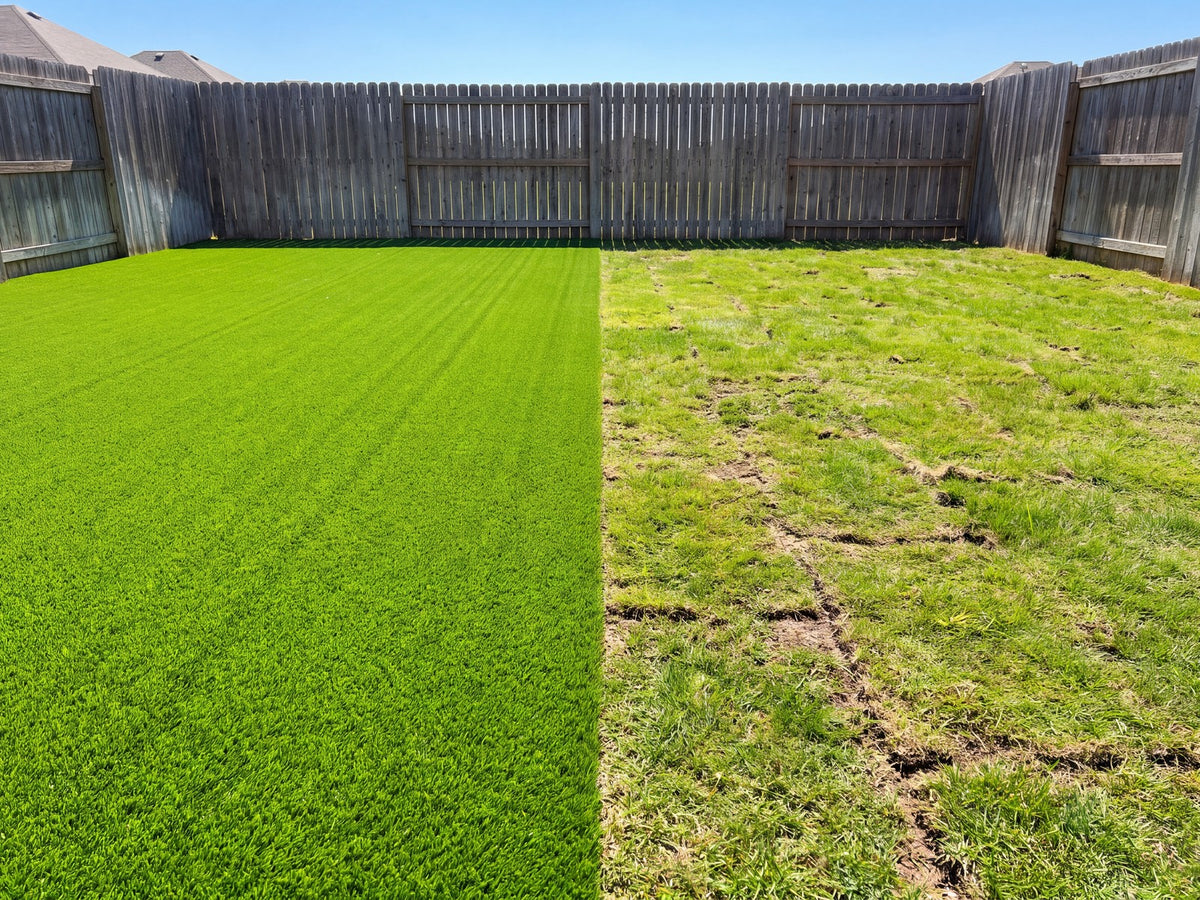
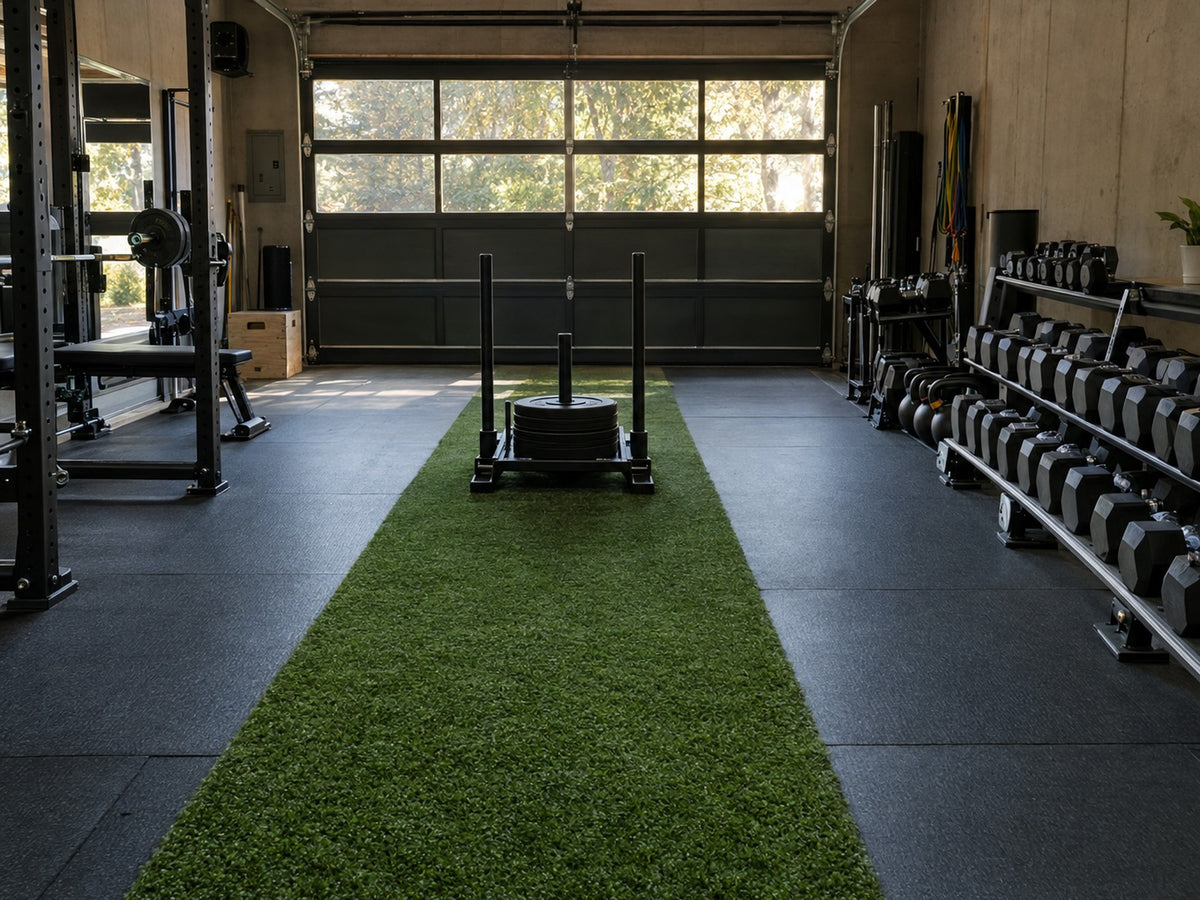
Lay artificial turf straight over hard ground or a slab with no cushioning underneath, and you get carpet on concrete — flat, hard, and done matting flat within a season. A shock pad for artificial grass is the layer that fixes that: a foam or rubber cushion between your base and your turf that absorbs impact, protects joints, and keeps the surface springy for years instead of months.
Not every lawn needs one. Plenty of installers sell shock pads on every job because it's an easy upsell, and plenty of DIYers skip them everywhere because the samples at the store look optional. Neither call is right every time. Here's exactly when a shock pad earns its cost, what to buy, how to install it, and when your base alone already does the job.
What a Shock Pad Actually Does Under Artificial Turf
A shock pad is a dense foam or rubber layer installed on top of your compacted aggregate base and under the turf and infill. It does three jobs your base and turf backing can't do alone:
- Absorbs impact. Falls, repeated foot strikes, and ball drops hit the pad first, not bone and joint. That's the entire reason playground surfacing codes require a rated shock pad under fall zones.
- Restores spring. Turf backing alone compresses flat under repeated weight. A shock pad flexes and rebounds, so the surface feels alive instead of like carpet glued to a parking lot.
- Buys you drainage insurance. Quality shock pads are perforated or channel-cut, so water keeps moving down through the system instead of pooling at the surface.
None of that is marketing. It's the same engineering logic behind the padding under a gym floor or a running track — a compressible layer between a hard surface and the thing standing on it changes how that thing performs and how long it lasts.
When You Need One — Sports Fields, Playgrounds, Pet Areas, Everyday Lawns
Run your situation against these four categories before you spend a dollar on padding.
- Playgrounds and fall zones — non-negotiable. ASTM F1292 sets fall-height ratings for play surfaces, and a rated shock pad is how you hit them. This isn't a comfort upgrade here, it's a liability and code issue.
- Sports fields and batting cages — yes, almost always. Repeated, concentrated impact from cleats, balls, and sliding wears turf and base down fast without a shock pad absorbing the load. Skip it and you're replacing turf years early.
- Pet areas and dog runs — usually worth it. Dogs sprint, dig, and pivot on the same few square feet daily. A shock pad slows compaction in those hot spots and helps fibers spring back between uses instead of matting into a packed-down track.
- Standard backyard lawns on native soil — often skippable. A properly built 3 to 4 inch compacted base already gives a residential lawn enough give for normal foot traffic. Save the spend unless you're installing over concrete, pavers, or a patio slab with zero natural cushion.
The one case that overrides all of this: hard surfaces. Turf laid directly over concrete, decking, or pavers has no give from the surface below, full stop. A shock pad is the only thing standing between that slab and a lawn that feels like outdoor carpet.
Shock Pad Materials Compared
Three materials cover nearly every install. The differences matter more than the marketing around them suggests.
- Closed-cell foam (polyolefin/polyethylene). The default choice for residential and light commercial work. Pre-punched drainage holes, easy to cut and handle solo, and it runs roughly $0.50 to $1.50 per square foot depending on thickness. Great compression recovery for moderate, repeated loads — less great under constant heavy impact, where foam eventually fatigues and thins out.
- Rolled or panel rubber. Denser, heavier, and pricier at $1.50 to $3+ per square foot, but it holds its shape under years of repeated impact where foam would flatten. This is the standard for sports fields, batting cages, and commercial play areas that see daily, concentrated use.
- Recycled rubber-foam composite blends. A middle-ground product, often marketed on sustainability, with performance that lands between straight foam and straight rubber. Specs vary a lot by supplier — get an actual data sheet before assuming it matches either category.
Rolled products install faster over large open areas; interlocking panels handle tight or irregular spaces better and let you replace one damaged section without pulling up the whole pad. For a backyard job, rolled foam wins on cost and speed almost every time.
How to Install a Shock Pad Correctly
A shock pad only performs if the base under it and the turf over it are both done right. Here's the sequence:
- Finish your base first. Excavate, compact your aggregate to 95% Standard Proctor density, and grade a 1 to 2% slope for drainage. A shock pad on top of a soft, uncompacted base just gives you a cushion sitting on a problem — it doesn't fix the problem.
- Dry-fit before you commit. Roll or lay panels across the full area and trim to fit around edges, drains, and obstacles before any adhesive touches the ground.
- Seam tight, no gaps. Butt edges flush — gaps and overlaps telegraph straight up through the turf as visible ridges or dips, especially once infill settles.
- Secure it down. Use seaming tape on the joints and perimeter adhesive or landscape staples to anchor the pad so it can't shift under the turf during installation or heavy use later.
- Stretch and seam the turf over it. Lay turf per standard installation practice, stretching it taut before seaming and nailing the perimeter so the surface above the pad stays flat and doesn't wrinkle.
- Infill and brush to finish. Add infill at the manufacturer's recommended rate and brush it in to stand the fibers up and settle everything into place.
If you've already got turf down over a hard surface without padding and it's showing flat spots, this is also the fix — pulling turf to retrofit a shock pad underneath beats living with a dead, lifeless surface for another decade.
Shock Pad Thickness and Specs by Use Case
Thickness is not a one-size-fits-all number — it's driven entirely by what's landing on the surface and how often.
- 10mm foam — patios, decks, and light-use residential areas over hard surfaces. Enough give to kill the "carpet on concrete" feel without adding real cost.
- 15 to 20mm foam or thin rubber — everyday backyard lawns with moderate pet or kid traffic, and areas where comfort matters more than certified fall protection.
- 25mm+ rated foam or rubber — playgrounds and fall zones, sized specifically to the fall-height rating your equipment requires. This is a code number, not a preference — check your local playground surfacing standard before buying.
- Dense rolled or panel rubber, 20 to 40mm — sports fields, batting cages, and commercial athletic surfaces under sustained, repeated impact from cleats, bats, and sliding.
When in doubt, go up one thickness tier rather than down — underpadding a high-impact area is the single most common reason shock pads "don't seem to help."
Shock Pad vs. Standard Underlayment — What's the Difference
These two terms get used interchangeably, and that's where confusion starts. Underlayment is the umbrella term for everything between the ground and your turf: the compacted structural base, the geotextile weed fabric, and — only where needed — a shock pad. A shock pad is one specific layer inside that system, added strictly for cushioning and impact absorption.
Every installation needs a base. Most need a weed fabric. Only some need a shock pad. If you're still mapping out what goes under your turf from the ground up — base depth, fabric, drainage — our full artificial grass underlayment guide breaks down the entire system layer by layer. Come back here once you've confirmed your base, and use this guide to decide if a shock pad belongs on top of it.
Get the Base Right, Then Keep It That Way
A shock pad is cheap insurance exactly where you need it — hard surfaces, playgrounds, pet runs, and sports turf — and skippable exactly where a solid compacted base already does the job. Match the material and thickness to the actual impact your surface takes, not to whatever the installer upsells by default.
Once your system is in the ground, protecting that investment comes down to maintenance. Heavy traffic compresses infill unevenly whether or not you've got a shock pad underneath, and a stiff rake only moves the problem around. For commercial installs, sports surfaces, and landscaper-grade upkeep, the Pro Series power brush redistributes infill and lifts flattened fibers fast enough to keep pace with real wear. Browse our full turf care guides for everything else that keeps a properly built system performing for its full lifespan.