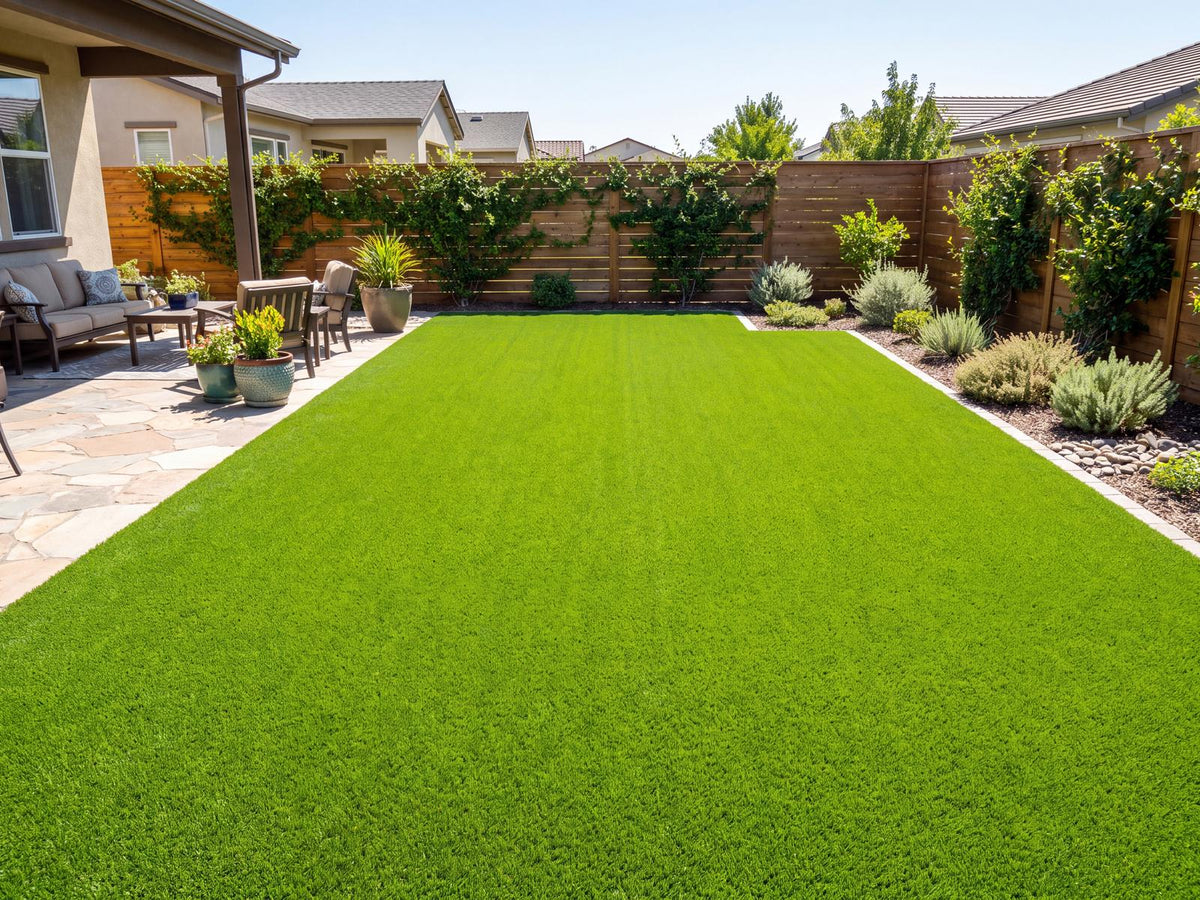
An artificial grass sports field takes more punishment in one practice than a backyard lawn sees all year — cleats, sprints, slide tackles, and back-to-back games in every kind of weather. Skip the maintenance and that field turns into a liability fast: infill drains out of the goal mouths, fibers lay down and stay down, and a hardness reading that used to pass safety testing starts failing it. Whether you're running a school football field, a rec league complex, or a private training facility, the fix is the same: run the right grooming, infill, and repair routine, and a field-grade turf system stays play-ready — and inspection-ready — for its full lifespan.
Why Sports Field Turf Wears Differently Than Backyard Turf
Backyard turf takes foot traffic and the occasional dog. A sports field takes concentrated, repetitive, high-force loading in the same few zones every single day — goal mouths, center circle, hash marks, batter's boxes. That repetition displaces infill and mats fibers down in predictable patterns long before the rest of the field shows wear.
Manufacturers build maintenance intervals around usage hours, not calendar time, for exactly this reason. FieldTurf, AstroTurf, and most infill-system suppliers recommend a full grooming pass every 40 hours of play — roughly every two weeks during a normal season, more often if you're running multiple teams through the same footprint. A single high school football field can log 300-plus hours of combined practice and game time across a fall season; a multi-sport rec complex running soccer, lacrosse, and football on the same field racks up usage even faster. Skip the interval and the wear compounds: uneven footing, inconsistent ball bounce, and infill loss that no amount of brushing fixes once it's gone.
Grooming and Infill Redistribution: The Weekly Routine
Grooming is the single highest-leverage maintenance task on a synthetic field, and it does three things at once: redistributes infill evenly across the surface, stands fibers back upright after compaction, and clears surface litter before it works down into the infill layer.
Use a nylon or polypropylene bristle brush — never a wire or metal-bristle brush, which snags and damages fibers. Groom in a consistent direction across the field (most crews rotate 90 degrees pass to pass to avoid grain lines and compaction ruts), and pull infill back into any zone that's visibly thinning before you brush the rest. Infill type matters here too: crumb rubber, sand, and organic infill compact and redistribute differently, so match your frequency and brush pattern to what's actually in your system, not a generic schedule pulled from a different field type.
On a field this size, hand tools don't scale. The Pro Series runs a Briggs & Stratton CR950 208cc petrol engine at landscaper grade — the kind of self-propelled power a facilities crew needs to groom a full-size field in a fraction of the time a push broom takes, without burning out a crew member's shoulder doing it.
Repairing High-Traffic Zones Before They Become Bald Spots
Infill loss and fiber wear don't happen evenly. They concentrate in predictable zones: goal mouths, sidelines, field entries and exits, and anywhere players cluster and pivot. Baseball and softball fields add another wear pattern — batter's boxes and pitcher's mounds take repetitive digging and pivoting that no other zone on the field sees, and they need their own inspection and infill top-off cadence separate from the rest of the field.
Catch those zones early and a top-off of infill plus a grooming pass fixes them. Ignore them and you're looking at exposed backing, seam stress, and eventually a patch repair that costs real money. Two habits keep repair costs down. First, inspect seams and inlays on every grooming pass — repeated impact loosens adhesive and stitching faster than most crews expect, and a seam caught early is a five-minute fix instead of a re-seam job. Second, clear litter, leaves, and debris after every game or practice block, before it gets ground into the infill layer and starts trapping moisture. A PickUp Pro Max lawn sweeper clears a field-sized area in one pass instead of hours of raking, and it keeps organic debris from feeding the moss and algae growth that shows up in low-lying, shaded corners.
Safety Standards: Fall Height, Heat, and Fiber Wear
Safety testing is not optional on a field where people play contact sports. Surface hardness — measured as g-max under ASTM F355 — has to stay under 200 g's, the threshold accepted by the U.S. Consumer Product Safety Commission. Cross that line and the field needs remediation before it's used again, full stop. Most facilities test annually, and grooming is the cheapest lever you have for keeping g-max in range: even infill distribution absorbs impact; compacted, displaced infill doesn't.
Heat is the other safety variable synthetic surfaces deal with that natural grass doesn't. Infill and fiber temperatures on a sunny field routinely run 30 to 50 degrees Fahrenheit above ambient air temperature, and that heat concentrates fastest where fibers have matted down and lost their upright cushion. Regular grooming keeps fiber pile standing at its designed height, which does more for both heat dispersion and impact absorption than any single maintenance task on this list.
When to Replace vs. Repair a Field
Not every problem is a repair. Know the difference before you spend money in the wrong place.
Repair the field when: a seam has separated in an isolated spot, one or two zones have lost infill but the backing underneath is intact, or you're dealing with a localized burn, tear, or bald patch from a one-off incident.
Plan for replacement when: g-max testing comes back over 200 on multiple retests despite regrooming, fiber pile height has dropped below the manufacturer's minimum spec across large sections, or the backing itself is degrading — cracking, delaminating, or tearing in more than a handful of places. At that point, no amount of grooming restores the cushioning and drainage the system was engineered to provide, and you're maintaining a field that's already failed its core job: keeping players safe.
Pro-Grade Equipment for Field-Sized Maintenance
A backyard power broom is built for a driveway strip of turf, not a 100-yard field. Field-scale maintenance needs field-scale equipment, and the gap between the two shows up fast in how long a maintenance window actually takes.
The Pro Series — Briggs & Stratton CR950 208cc, landscaper grade — handles the grooming pass across a full field without multiple battery swaps or motor strain. For debris cleanup between grooming sessions, a PickUp Pro Max or tow-behind sweeper clears litter and loose infill faster than a crew with rakes, which matters when you've got a tight turnaround between the last practice and the next game.
Build a maintenance log around usage hours, not a fixed calendar. Track hours played, grooming passes, and infill top-offs so you catch wear before it becomes a safety issue instead of after. For more on choosing the right equipment for your setup, check our full equipment guides.
An artificial grass sports field rewards the crews that stay ahead of wear instead of reacting to it. Groom on a 40-hour cycle, top off infill in the zones that lose it first, test g-max annually, and know the line between a repair and a replacement before you're forced to make that call under pressure. Do that, and a field-grade turf system delivers every practice, every game, every season it was built for.
Shop the Pro Series for landscaper-grade grooming power built for field-sized turf.