What Does Artificial Grass Maintenance Actually Involve?
Artificial grass maintenance is not the zero-effort fantasy the sales pitch sometimes implies — but it's a fraction of what a real lawn demands. No mowing, no fertilizing, no watering schedule to babysit. What's left is a short list of weekly, monthly, and seasonal habits that keep your turf looking showroom-fresh for 15 to 20 years instead of going flat, faded, and funky by year five. Here's exactly what artificial grass maintenance actually involves, and the tools that turn an hour of work into fifteen minutes.
Weekly Maintenance Tasks Every Turf Owner Should Do
Turf doesn't grow, but it does collect. Every week, run through four things:
- Clear debris. Leaves, twigs, and trash sitting on the fibers trap moisture underneath and speed up matting. A quick pass with a leaf blower or a stiff broom handles it in minutes.
- Rinse it down. A garden hose knocks out dust, pollen, and pet urine before they build up into odor or staining. Do this more often in high-pollen season or with dogs on the lawn.
- Brush the fibers upright. Foot traffic and furniture legs press blades flat. Brushing against the grain — not with it — lifts them back up and keeps the lawn looking like turf instead of a doormat.
- Spot-clean spills fast. Barbecue drips, sunscreen, and pool chemicals sit on the surface and stain if you let them dry. Mild soap and water lifts almost everything within the first hour.
Skip these for a month and you won't notice much. Skip them for a season and you're looking at matting, faint yellowing, and a lawn that smells like the dog that's been using it. The fix at that point costs a lot more time than the ten minutes a week would have.
Ten minutes is the realistic number for a standard backyard. A pass with a leaf blower on debris, a five-minute rinse, and a quick brush of the highest-traffic strip — the path from the patio to the gate, the spot under the swing set — covers most of it. Bigger properties and anything with dogs need closer to fifteen.
Monthly and Seasonal Maintenance Checklist
Weekly habits keep the surface clean. Monthly and seasonal checks protect what's underneath.
Monthly:
- Deep-brush the entire lawn, not just high-traffic zones.
- Check seams and edges for lifting, gaps, or exposed backing.
- Inspect infill levels — thin spots show up as flatter, harder patches where the base is closer to the surface.
Spring: Rinse away winter grime and pollen before it cakes into the fibers. Check drainage points for blockages before the rainy season hits.
Summer: Heat and foot traffic spike together. Rinse pet areas more often — warm weather intensifies urine odor — and watch for infill migration from pool splash-out or sprinkler runoff nearby.
Fall: Leaf drop is the big one. Falling leaves that sit through a wet week mat down fibers and can stain them. Stay ahead of it instead of doing one huge cleanup in November.
Winter: Snow compresses fibers, and repeated freeze-thaw cycles can loosen infill at the edges. Brush the lawn back up once it thaws instead of leaving it flattened all season.
Tools That Make Turf Maintenance Faster (Power Brushes & Sweepers)
A rake works. It's also the slowest way to maintain artificial grass, and it's why "low maintenance" gets a bad reputation — people are doing it with the wrong tool.
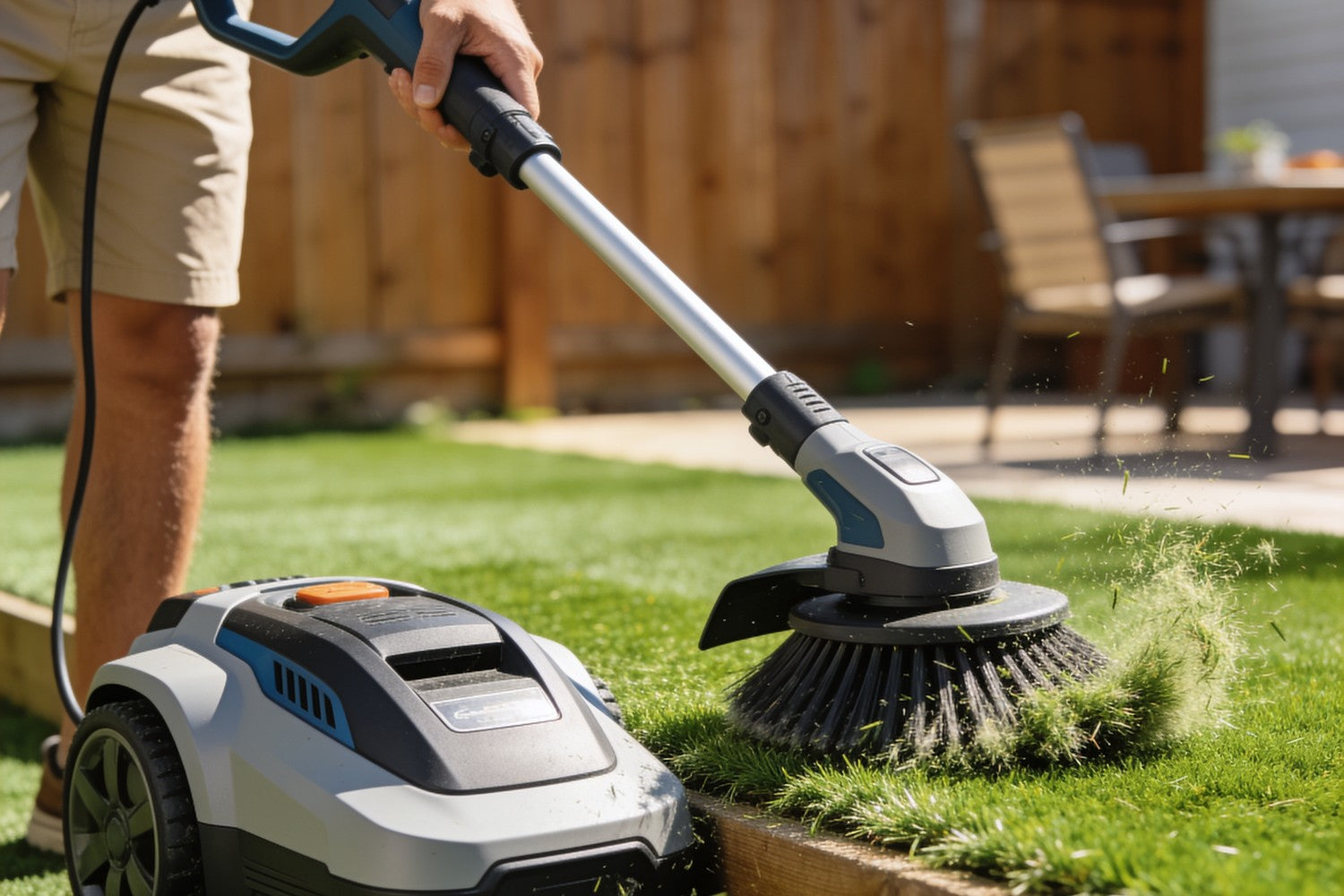
A dedicated turf power brush does in minutes what a hand rake does in an hour, because it's spinning bristles at speed instead of dragging them once across the surface.
- TurfoVolt — cordless, dual G-Core 4Ah batteries, 2,500 RPM, 40-minute runtime. No cord to drag around a yard, which matters if your turf wraps around a pool, a fence line, or anything else a 50-foot extension cord fights with.
- TurfoMax — corded, 13-amp motor, DuoHelix brush, 15-inch/380mm self-propelled width. Built for bigger lawns where runtime matters more than portability — plug in and go until the whole yard is done.
- AstroComb 18" Turf Rake — manual, for spot work between power-brush sessions: matted corners, around planters, tight spaces a wide machine can't reach.
The RPM number matters more than people think. Anything under 2,000 RPM struggles to fully lift fibers that have been flattened by furniture or heavy foot traffic — you'll brush the surface but the base stays compacted. That's the difference between a lawn that looks "brushed" and one that looks genuinely restored.
Fixing Common Problems: Matting, Weeds, and Odor
Three complaints cover 90% of artificial grass maintenance issues.
Matting. Caused by sustained weight — furniture feet, kids' play equipment, dog runs — pressing fibers flat until they stop springing back on their own. Move furniture periodically, and run a power brush over matted zones against the grain. A single pass at 2,500 RPM usually restores fibers a hand rake won't budge.
Weeds. Real weeds don't grow through properly installed turf backing, but seeds land on top and root in infill or along seams. Pull them by hand while small, or spot-treat with a turf-safe vinegar solution. Avoid systemic herbicides that can degrade backing over time.
Odor. Almost always pet urine, and almost always a rinsing problem, not a turf problem. Ammonia builds up in infill when urine isn't flushed through fast enough. Rinse pet zones daily in hot weather, use an enzyme-based cleaner monthly, and consider a zeolite or antimicrobial infill if odor keeps coming back after cleaning. If the smell persists after rinsing and enzyme treatment, the infill itself may be saturated — that's a base-level fix, not a surface clean, and usually means pulling back a section of turf to flush or replace the infill underneath.
None of these three are turf failures. They're maintenance gaps, and every one of them is preventable with the weekly and monthly habits above.
How Maintenance Affects Turf Lifespan and Warranty
This is the part most buyers skip past: most turf warranties are conditional, not automatic. Manufacturers expect documented basic care — debris removal, rinsing, brushing — and neglect can void a claim on premature fading or backing failure.
Maintenance also directly extends functional life. Turf that gets brushed regularly keeps its fibers standing, which keeps drainage channels between blades open. Turf that never gets brushed mats down, traps moisture at the base, and wears the backing faster from the inside. The practical range: 15 to 20 years for maintained turf, versus 8 to 10 for turf that's ignored — same product, different outcome, entirely down to upkeep.
That gap compounds. A lawn that stays brushed and rinsed sheds water fast, so infill doesn't stay saturated long enough to breed odor-causing bacteria or degrade the backing glue at the seams. A lawn that gets ignored holds moisture, mats permanently within a year or two, and starts showing UV-faded patches where dirt film has blocked the fiber's built-in protection. Keep the receipts and a rough log of what you did and when — most manufacturers only ask for reasonable proof of basic care, not a professional service contract, to honor a warranty claim.
Building a Maintenance Routine That Actually Sticks
The lawns that stay looking new aren't maintained harder — they're maintained on a schedule instead of in a panic. Put ten minutes on a weekly calendar reminder for debris and a rinse. Block one Saturday a month for a full brush pass. Flag the season changes for the deeper check.
If you're maintaining anything bigger than a small patio, a manual rake alone will burn an hour you don't have. A cordless power brush turns that hour into fifteen minutes and actually lifts fibers a hand tool can't.
The routine that sticks looks something like this: a weekly ten-minute pass with a blower and hose, a monthly Saturday with the power brush for a full deep-lift, and a seasonal checklist run at the start of spring, summer, fall, and winter. Write it down, put it on a shared calendar if more than one person uses the yard, and treat it the same as any other recurring home task — not an emergency fix you get to once the lawn already looks bad.
Check the full lineup of turf maintenance tools and our care guides to build a routine that fits your yard — not the other way around.