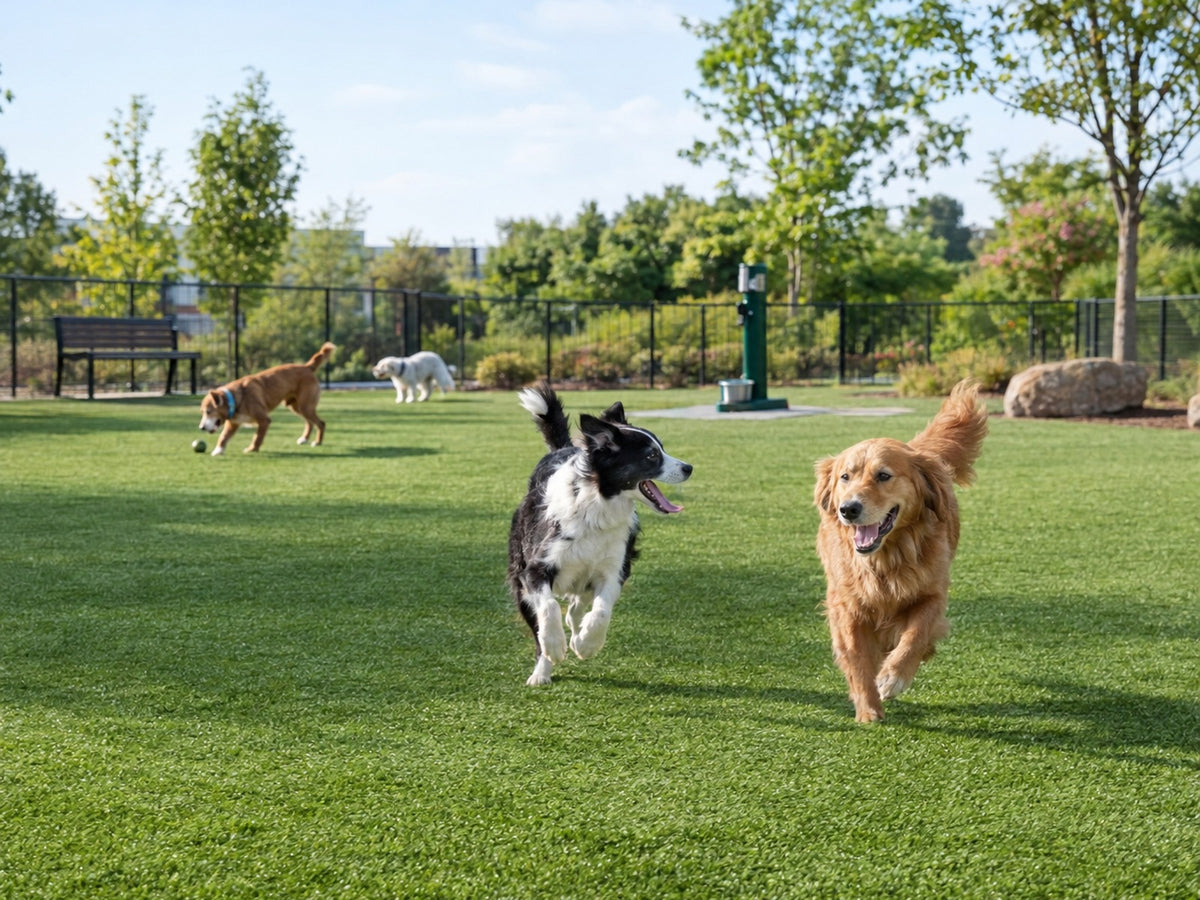
Every artificial grass listing says "non-toxic" somewhere on the page. Almost none of them tell you what that word is supposed to verify. Non-toxic artificial grass isn't a certification — it's a bundle of separate claims about backing, yarn, and infill, and a seller can say it without proving any of them. If you're shopping for turf for a yard where kids and dogs spend hours a day, you need to know exactly what to check before you believe the label, and what to do afterward to keep exposure as low as the manufacturer promised.
This guide breaks the marketing language into the three things that actually matter — backing, yarn, and infill — shows you what the real research says about each, and gives you the maintenance routine that keeps dust, residue, and allergens from building up on turf you've already installed.
What "Non-Toxic" Actually Means on an Artificial Grass Label
"Non-toxic" has no legal definition in the turf industry. There's no federal standard a manufacturer has to meet to use the word, which means it functions as marketing copy until you ask for the specifics behind it. The claim breaks into three components, each with its own test and its own paper trail:
- Backing — is it lead-free, and tested to a recognized standard (ASTM F2765)?
- Yarn — is it PFAS-free, and verified by third-party lab testing rather than just a supplier statement?
- Infill — what's actually in the bag, and does it carry independent safety data?
A seller who can hand you lab results for all three has earned the word. A seller who just prints "non-toxic" on the product page and moves on hasn't. Ask for documentation before you buy — any manufacturer confident in their materials will have it ready.
Lead-Free Backing and PFAS-Free Yarn: What to Verify Before Buying
Lead-free backing. Older turf backings used lead chromate as a pigment stabilizer. The industry standard test is ASTM F2765-09, which measures total lead content via EPA Method 3052. Compliant turf tests below 300 mg/kg (ppm), per CPSC guidelines. Don't take "lead-free" at face value — ask the seller for the actual test result, not just the claim. A legitimate supplier will produce it in one email.
PFAS-free yarn. PFAS ("forever chemicals") showed up in some turf yarn as a processing aid during extrusion — not as a performance feature, just a manufacturing shortcut. They don't break down in soil or water, and they're the chemical class state regulators are watching most closely right now. California's Department of Toxic Substances Control has an active technical review open on PFAS in artificial turf, with manufacturers submitting removal data as of early 2026. The credible standard here is third-party verified testing for total organic fluorine, not a label that just says "PFAS-free." Major manufacturers now publish these results — if a seller can't produce theirs, that's your answer.
What to actually ask for: a lead test report referencing ASTM F2765, and a PFAS test report naming the lab that ran it. Two documents, two minutes of your seller's time. If you can't get them, shop elsewhere.
Infill Materials Compared: Zeolite, Silica Sand, and Crumb Rubber
Infill gets less attention than backing and yarn, but it's the material your kids and pets have the most direct, prolonged contact with — it's what they're kneeling, rolling, and lying in.
- Crumb rubber (SBR, recycled tire) — the cheapest option and still the most scrutinized. Peer-reviewed testing has found PAHs, VOCs, and metals including lead and zinc in rubber crumb infill, with concentrations varying widely by sample. It also runs hotter than other infill types and off-gasses a distinct rubber smell in direct sun.
- Silica sand — inert and chemically simple, but it doesn't control odor or moisture on its own and compacts over time without added antimicrobial treatment.
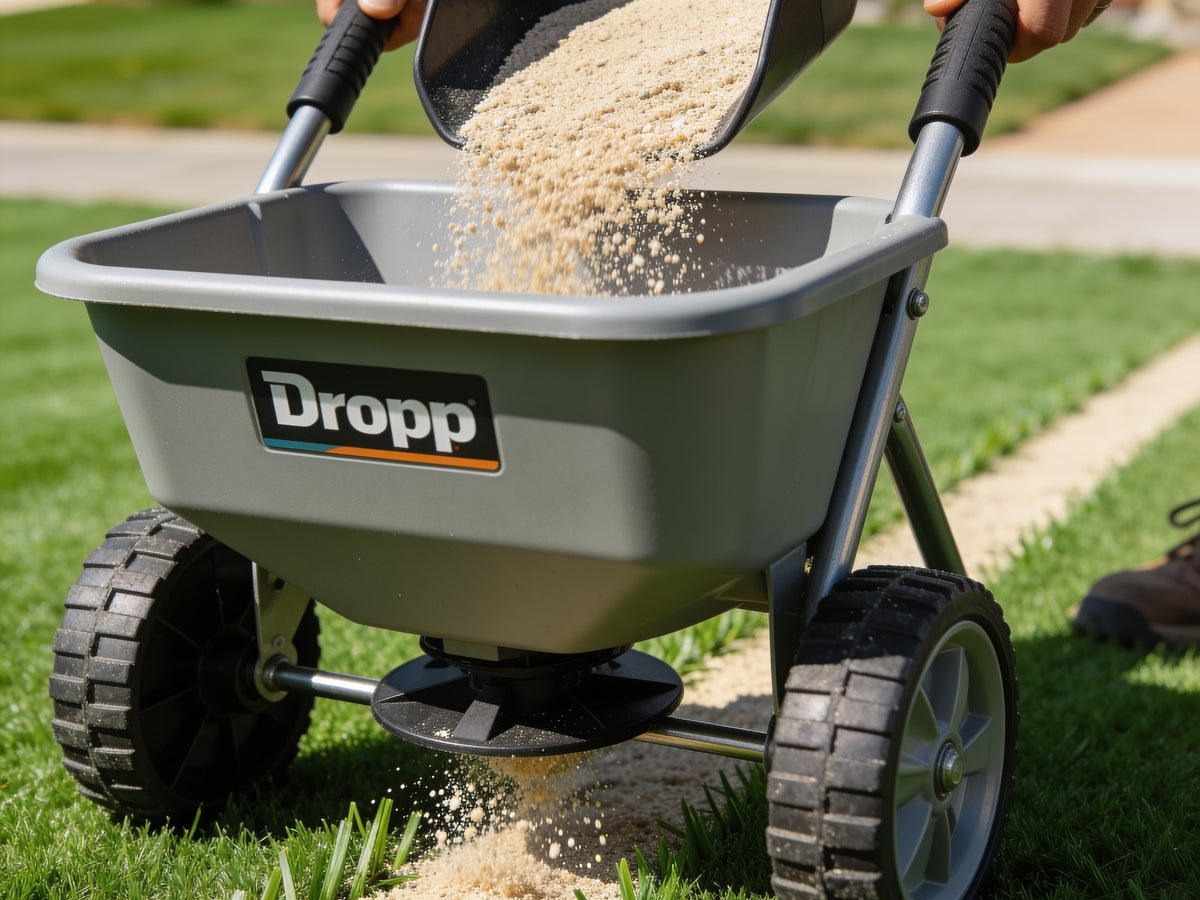
- Zeolite — a natural volcanic mineral with inherent antimicrobial and odor-neutralizing properties. It's the material most "non-toxic" claims point to specifically, and it's the infill we recommend pairing with routine brushing for the lowest-maintenance, lowest-exposure result.
None of these is risk-free in an absolute sense — every infill is a manufactured or mined material, not a natural lawn. The honest comparison is relative: zeolite and silica carry a far thinner research file of concern than crumb rubber, and that's the deciding factor if you're installing turf somewhere kids or pets spend serious time.
What the Research Actually Says About Turf Chemical Exposure
Here's where the marketing pages and the advocacy pages both oversimplify, and where the actual science lands in the middle.
Multiple peer-reviewed health-risk assessments — including a comprehensive review of eleven separate studies — found that exposure to chemicals of concern in crumb rubber infill, via ingestion, dermal contact, or inhalation, did not meaningfully elevate health risk under typical use. Epidemiological studies tracking cancer rates near synthetic turf fields found no significant association. That's the finding that turf manufacturers cite, accurately.
What the same body of research flags consistently, without exception, is heat. Every major review — from state environmental agencies to independent academic panels — identifies surface temperature, not chemical exposure, as the primary documented safety concern with synthetic turf. Turf can run 40 to 70 degrees hotter than ambient air temperature in direct sun, regardless of infill or fiber type. If your comparison shopping stops at "non-toxic" and skips heat management, you're solving for the wrong risk.
The practical takeaway: chemical exposure from a well-sourced, lab-verified turf product is a low and well-studied risk. Surface heat is the risk that actually requires a plan — shade, watering timing, and fiber color choice matter more day-to-day than which infill bag you bought.
How Regular Cleaning Reduces Dust, Residue, and Allergen Buildup
Buying verified-safe materials is step one. Keeping that safety margin intact over years of use is a maintenance job, not a one-time purchase decision. Turf doesn't biodegrade organic debris the way soil does — pollen, dander, dust, and fine infill particles sit on the surface and in the fiber base until something physically removes them.
A weekly pass with a Reviver corded power brush lifts matted fibers and pulls trapped debris up out of the infill layer before it compacts into a dust reservoir. That brushing action does double duty: it keeps zeolite infill's antimicrobial surface exposed to open air instead of buried under compacted grime, and it physically removes the allergens that build up in any outdoor surface — turf included.
For anyone managing more square footage or steeper buildup — large yards, dog runs, high-traffic commercial turf — a cordless option like TurfoVolt covers more ground per session without being tethered to an outlet, which matters if your "non-toxic" yard also needs a weekly 15-minute routine to actually stay that way.
Skip the brushing step and even the best-sourced turf starts collecting the same dust and residue problems as a cheap one. The materials only hold their safety margin if the maintenance keeps up with them.
Choosing and Maintaining Turf for Kids' and Pets' Safety
Put it together and the checklist is short:
- Ask for the lead test report (ASTM F2765) before you buy — not after.
- Ask for the PFAS test report, naming the testing lab — a label claim isn't a test result.
- Choose zeolite or silica infill over crumb rubber if kids or pets will have prolonged ground contact.
- Plan for heat, not just chemicals — shade structures, watering timing, and lighter fiber colors matter as much as infill choice.
- Brush weekly with a dedicated turf power brush to keep dust, pollen, and dander from accumulating in the base.
A manual rake like the AstroComb turf rake handles light daily fluffing between full brush sessions — useful for spot-checking high-traffic zones like a sandbox edge or a dog's favorite corner without dragging out the power equipment every time.
"Non-toxic" on a product page is a starting point for questions, not an answer. Verify the backing, verify the yarn, choose your infill with eyes open, and then keep the surface clean enough that the safety work you did at purchase actually holds up five years in. That's the difference between a turf label and a turf routine.