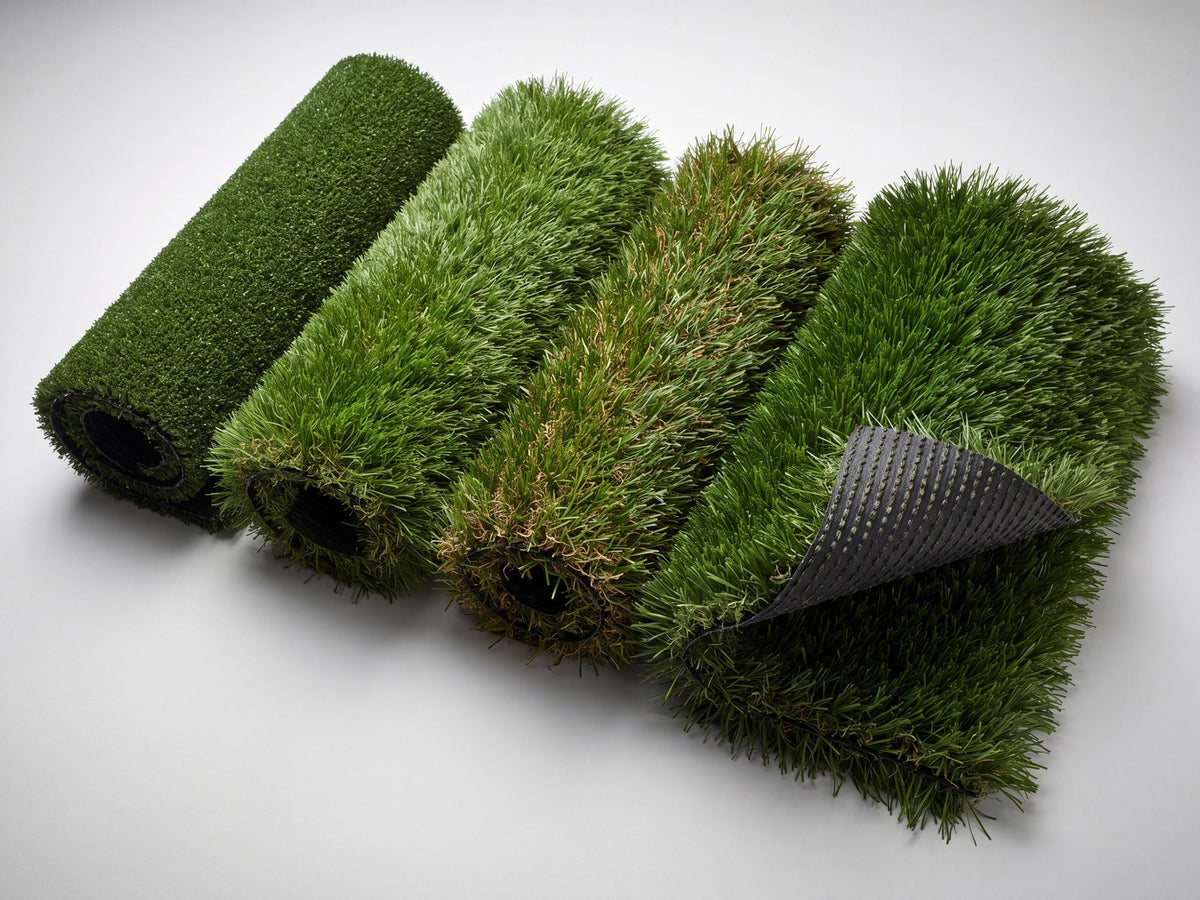
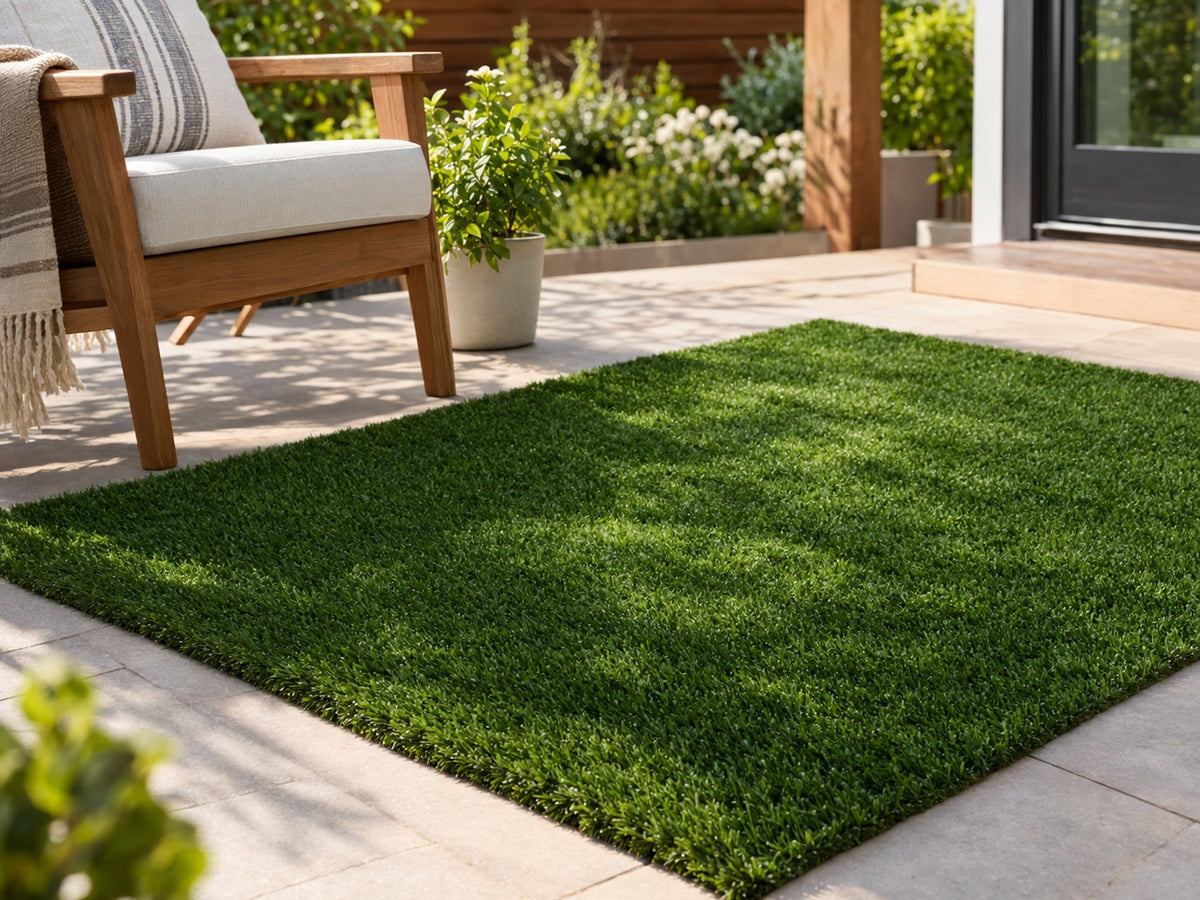
"Artificial turf tools" means two completely different toolboxes, and most buying guides blur them together. One kit gets used once, on install day, and then sits in a garage forever. The other kit gets used every month for the next 15–20 years and determines whether your turf still looks new in year ten. Confuse the two and you either overspend on gear you'll use once, or underspend on the gear that actually protects your investment.
Here's the clean split: installation tools cut, join, and anchor the turf. Maintenance tools keep the fibers standing, the surface clean, and the infill level after the installers pack up. We'll break down both, tell you where power tools earn their cost over hand tools, and give you a starter kit for either job based on your yard size and budget.
Installation Tools You'll Use Once (Seam Tape, Nails, Cutters)
Installation tools do one job: get the turf into the ground correctly, then they're done. You don't need pro-grade versions of most of these unless you're installing for a living.
- Turf cutter or sod cutter — removes existing grass and roots down to bare soil. Rent this; you won't need it again.
- Plate compactor — compacts your base material so it doesn't settle and create low spots later. Also a rental item for most homeowners.
- Utility knife with hooked blades — cuts turf cleanly along backing lines without fraying fibers. Keep spare blades; dull ones tear instead of cut.
- Seam tape and adhesive — joins turf panels so the seam disappears instead of showing a visible line.
- Galvanized turf staples or nails — anchor the perimeter and seams so wind and foot traffic don't lift edges.
- Power broom or stretcher — removes install-day kinks and wrinkles before the turf is pinned down permanently.
- Measuring tape and chalk line — keeps your cuts straight across a job that's rarely a perfect rectangle.
Buy or rent these once, do the job right, and you're done with this list for the life of the lawn.
Maintenance Tools You'll Use for Years (Sweepers, Brushes, Vacuums)
Maintenance tools are the opposite: cheap to skip in month one, expensive to skip by year three. Synthetic fibers flatten under foot traffic and furniture, infill migrates and compacts, and debris builds up at the base of the blades where a regular broom can't reach. Skip maintenance and you get matting, odor, and a lawn that looks ten years older than it is — covered in more detail in our guide to repairing artificial turf yourself.
The core maintenance kit:
- Power turf brush or sweeper — the single highest-impact tool you'll own. It lifts flattened fibers, redistributes infill, and pulls out embedded debris in one pass.
- Stiff-bristle hand rake or turf comb — for small areas, edges, and spot-touch-ups between full sweeps.
- Leaf blower or vacuum attachment — clears surface debris before brushing so you're not grinding grit into the fibers.
- Infill top-up material — replaces infill lost to compaction and wind over time, keeping the base cushioned and fibers upright.
- Pet-safe enzymatic cleaner — breaks down odor-causing bacteria at the backing level, not just the surface.
This is the kit that actually determines your turf's lifespan. Everything on the installation list is a one-time cost; everything here is a recurring investment that pays for itself in avoided replacement.
Power Tools vs. Hand Tools: When Each One Earns Its Cost
A hand rake or manual turf comb works fine for a 200-square-foot patio or a dog run you touch up weekly. It doesn't work for a full backyard, a sports field, or any space you want to maintain in under 20 minutes.
Here's the real math: a motorized brush covers in one pass what a hand rake takes four or five passes to do, and it does it more evenly because the brush head spins at a fixed RPM instead of varying with how hard you're pushing. For a 1,500-square-foot lawn, that's the difference between a 15-minute monthly maintenance routine and an hour-long one. If you're maintaining anything bigger than a small patio, a powered option pays for itself in time within the first few sessions.
Width and RPM matter as much as the power source. A narrow 12" brush head needs more passes to cover the same ground as a 15" head, but it's lighter and easier to maneuver around planters, pavers, and edging. Higher RPM lifts matted fibers faster but can be overkill on a low-pile putting-green turf, where you want control more than raw speed. Match the spec to your actual surface, not the biggest number on the spec sheet.
Power options also split by motor type:
- Corded electric (like the Reviver, 1,300 RPM, 12" width, variable speed) — consistent power with no battery to charge, best for yards near an outlet.
- Cordless battery (like TurfoVolt, dual G-Core 4Ah batteries, 2,500 RPM, 40-minute run time) — full mobility for yards without easy outlet access, no cord to snag on edging.
- Petrol / commercial-grade (Pro Series, Briggs & Stratton CR950 208cc) — built for landscapers and large properties covering multiple lawns per day.
Building a Starter Kit for DIY Installers
If you're installing turf yourself for the first time, keep the install-day spend lean — most of it is single-use:
- Rent the plate compactor and sod cutter for the day instead of buying.
- Buy a quality hooked-blade utility knife with a pack of spare blades (under $20).
- Budget for seam tape, adhesive, and galvanized staples based on your square footage — your turf supplier can size this for you.
- Don't buy a maintenance brush yet. Wait until the install is done and you know your actual traffic pattern before choosing power level.
Total install-tool spend for a typical residential yard runs $150–$400 depending on rental rates in your area, almost all of it one-time.
Building a Maintenance Kit for Long-Term Turf Care
This is where to actually spend. A maintenance kit built right the first time avoids the matting, odor, and premature wear that drive early replacement:
- Small spaces (under 300 sq ft, patios, dog runs): start with the AstroComb manual turf rake ($39) and a pet-safe enzymatic cleaner. Add a corded brush once you're maintaining weekly.
- Mid-size yards (300–1,500 sq ft): the Reviver ($199) covers this range with consistent corded power and a 12" width that moves fast without being hard to control.
- Larger yards or cord-free needs: TurfoVolt ($399) gets you 40 minutes of cordless runtime at 2,500 RPM — enough for most full backyards in one charge.
- Debris pickup between brush sessions: a lawn sweeper like the PickUp Pro Max ($149) handles leaves and loose debris without a power cord at all.
Our Recommended Lineup by Budget and Yard Size
If you're deciding where to put your first (or next) maintenance dollar, use this as your shortcut:
- Under $50, any size: AstroComb manual rake — the baseline every turf owner should have in the garage.
- $150–250, small-to-mid yards: Reviver corded power brush — the best RPM-to-price ratio in the lineup.
- $350–450, mid-to-large yards, no outlet access: TurfoVolt cordless power sweeper — go-anywhere power with real runtime.
- $800+, landscapers and multi-property use: Pro Series petrol unit — built for daily commercial-grade workloads.
Installation tools get your turf in the ground once. Maintenance tools keep it looking like day one for the next decade and a half. Spend lean on the first list, spend smart on the second, and you'll never have the "my artificial grass looks worn out already" problem that sends most owners back to the install guides looking for what went wrong.
One more thing worth saying plainly: don't buy maintenance gear before you've lived with your turf for a season. Traffic patterns, pet use, and sun exposure all change what "enough power" actually means for your yard. Install first, maintain lean for a few months, then upgrade to the brush or sweeper that matches the wear you're actually seeing — not the one a one-size-fits-all guide told you to buy on day one.
Browse the full maintenance lineup on greensweepco.com and build the kit that matches your yard — not someone else's.