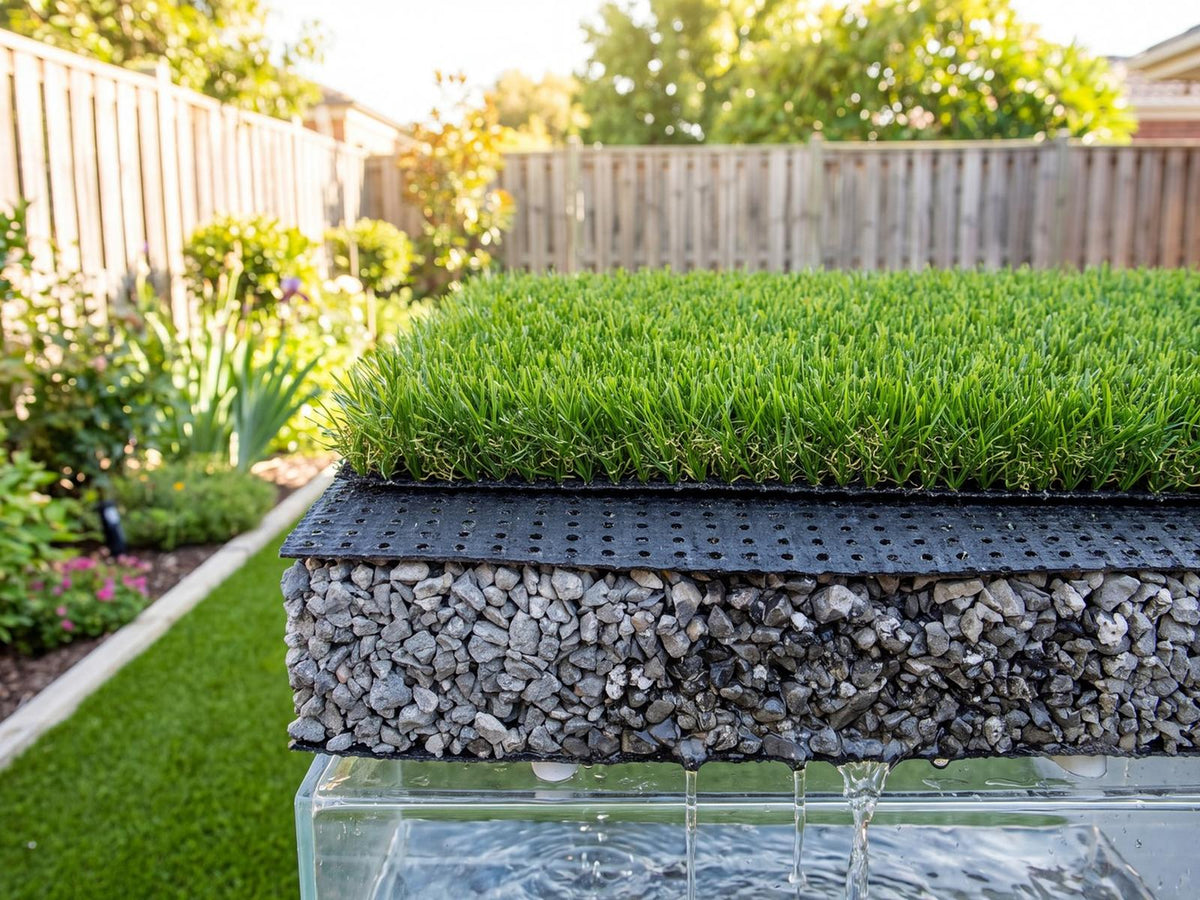
Not every green space needs a full turf installation. If you're covering a balcony, dressing up a concrete patio, or filling a bare spot by the pool, an artificial grass rug does the job in an afternoon — no base prep, no seaming, no contractor. But "grass rug" covers everything from a $30 doormat-grade mat to a $250 premium roll, and the difference between them shows up fast once the rug's outside in real weather.
Here's what actually separates a rug that looks good for one summer from one that holds up for five.
What an Artificial Grass Rug Actually Is
A grass rug is pre-cut, edge-finished synthetic turf sized to drop into a space — no installation required. Most run in standard sizes: 4×6, 5×8, 6×9, and 7×10 feet, with larger 7.5×13 options for bigger patios. Unlike a full turf roll, it ships ready to use: unroll it, let it relax flat for a few hours, and you're done. Some brands add corner grommets or double-sided tape for windy balconies and rooftops where it needs to stay put.
That convenience is the whole appeal. The tradeoff is that a rug takes more abuse per square foot than a full lawn install — foot traffic, furniture legs, and weather all concentrate on a smaller area, so the specs below matter more, not less.
Pile Height, Density, and Backing: The Specs That Decide Everything
Three numbers tell you almost everything about quality:
- Pile height. Shorter pile (around 1–1.5 inches / 30–37mm) resists matting under furniture and foot traffic and is easier to clean. Longer pile looks lush in photos but flattens fast under a chair leg or a dog's daily nap spot. For a rug that gets actual use, shorter pile wins.
- Density. This is the yarn count per square foot. Higher density means a softer feel, a more realistic look, and — critically — better fiber recovery after something sits on it. A low-density rug looks thin and patchy within a season; a dense one still looks full after two.
- Backing. Outdoor rugs need a perforated backing (rubber or polyurethane) that lets water drain straight through instead of pooling underneath. No drainage means mold, mildew, and a rug that smells bad by month three. If a listing doesn't mention drainage holes, assume it doesn't have them and skip it.
Material matters too. Polyethylene and polyethylene/polypropylene blends give you the best balance of softness and durability for home use. Nylon holds up to heavier commercial traffic but costs more and feels stiffer underfoot — overkill for a patio, worth it for a business entrance.
Matching Size and Material to Where It's Going
The right rug depends entirely on where it lands:
- Balconies and rooftops are exposed to more sun and wind than ground-level spaces. Prioritize UV-stabilized fibers (fading is the first thing to go without it) and secure the edges — tape or grommets — so wind doesn't lift a corner.
- Patios and pool decks need fast drainage above almost everything else. Splashes, rain, and hose rinses all need somewhere to go. This is where perforated backing earns its keep.
- Pet areas need both drainage and odor resistance. Urine has to pass through the backing quickly or it sits in the fibers. If you have dogs, treat drainage as non-negotiable, not a nice-to-have.
- Small decorative accents — a mudroom mat, a corner by the grill — can go cheaper and thinner since they see less exposure and less weight.
Buy for the harshest condition the rug will face, not the average day.
Grass Rug vs. Full Turf Installation: When Each Makes Sense
A rug isn't a smaller version of a full turf install — it's a different tool for a different job. A full installation (base prep, seaming, infill) is the right call for a permanent lawn replacement, a backyard that gets years of heavy use, or any space larger than a rug can realistically cover in one piece. A rug is the right call for rentals, balconies, seasonal setups, or any spot where you want the look now and might change the layout later.
The math that matters: full turf installation runs several dollars per square foot once labor is factored in, while a rug covers the same footprint for a flat $100–$250 with zero install cost. For a 6×9 space, that's the difference between a weekend project and a multi-day contractor job. The rug loses on permanence and edge-to-edge coverage for oddly shaped areas — it's a rectangle, not a custom cut — but wins on speed, cost, and the ability to pick it up and take it with you.
If you're weighing the two for a patio or backyard corner under about 100 square feet, start with a rug. If you're covering an entire yard, get quotes on a real installation instead.
What You'll Pay — and What Drives the Price
Grass rugs typically run $30 to $250 depending on size and quality, with most 6×9 to 7×10 options landing between $100 and $150. What pushes the price up isn't the size alone — it's face weight (heavier means denser and more durable), backing quality, and UV warranty length. A $40 rug and a $150 rug in the same dimensions are not the same product; the cheap one is thinner, drains worse, and fades faster.
Expect 3 to 8 years of life from a decent rug with reasonable care. Thin, uncoated, budget options often fall short of that; well-made rugs with real UV protection and a solid warranty regularly beat it.
The Maintenance Question Every Buying Guide Skips
Every guide covers pile height and backing. Almost none tell you how to actually keep a rug looking new — and that's the difference between hitting 3 years and hitting 8.
Three things wreck a grass rug early:
- Debris buildup in the fibers. Dust, pollen, and dry leaves work down into the pile and weigh the blades down, which is what makes turf look "flat" and tired even when the material itself is fine.
- Matting under furniture and traffic paths. Fibers pressed the same direction for weeks stop springing back on their own. They need mechanical help to stand back up.
- Trapped moisture at the edges. If a rug sits directly on concrete without airflow underneath, moisture gets trapped at the perimeter even with good backing, and that's where mildew starts.
None of this is hard to prevent. It just needs a routine, and most rug owners never build one because no one tells them to.
Keeping Your Rug Looking New, Season After Season
For a rug-sized space, you don't need heavy equipment — you need consistency. A quick weekly pass with the AstroComb 18" Turf Rake lifts crushed fibers back upright and clears out embedded debris in a few minutes, which is exactly the kind of light, frequent maintenance a rug needs to avoid matting. For a larger 7×10 or 7.5×13 rug that sees daily foot traffic, the Reviver — corded, 1,300 RPM, 12-inch width — does the same job faster and with less arm work, especially useful before it gets pressed flat under patio furniture for the season.
A simple routine:
- Weekly: Brush or comb against the grain to lift matted fibers, especially in traffic paths and under furniture.
- Monthly: Hose it down to flush dust and pollen through the backing — this is where drainage quality actually pays off.
- Seasonally: Pull furniture off the rug and rotate or lift it for a day so trapped moisture at the edges gets a chance to fully dry.
Skip the routine and even a premium rug mats out and dulls early. Follow it and a mid-range rug can outlast its own warranty.
The Bottom Line
An artificial grass rug is the fastest way to add real-looking green to a hard surface — no installation, no waiting. Pick one with short-to-medium pile, real density, and perforated backing for your specific spot, expect to pay $100+ for something that actually lasts, and build in a light brushing routine from week one instead of waiting until it's already matted. Browse GreenSweep's full lineup of turf care tools sized for everything from a balcony rug to a full backyard, or check the Guides page for more turf-specific care routines.