Is Artificial Grass Landscaping Worth It?
Artificial grass landscaping isn't just rolling out green plastic and calling it done — it's a design decision with real cost, real installation choices, and real upkeep most guides gloss over. If you're staring at a patchy lawn or a dead front yard wondering whether synthetic turf actually pencils out, here's the straight answer: yes, for most climates and most budgets, but only if you plan the layout to the yard you actually have, budget the real cost per square foot, and commit to the five-minute maintenance routine that keeps it looking new for a decade or more.
Big-box retailers will sell you the roll. They won't tell you which layout works for a 400-square-foot city lot versus a sloped half-acre, or what happens to your turf three summers in when you skip maintenance. That's the gap this guide fills.
Design Ideas by Yard Type
Turf isn't one-size-fits-all, and the layout that wins in a small urban yard will look wrong in a sprawling suburban one.
Small urban yards (under 500 sq ft). Go bold with pattern. A single unbroken turf panel edged in steel or aluminum landscape edging reads clean and intentional — the visual trick that makes a tight space feel bigger. Skip curves; straight lines maximize usable area in a small footprint. Add a gravel or pea-stone border strip along fences to handle runoff and give the eye a resting line.
Sloped yards. Grade is the first problem, not the last. Turf needs a stable, compacted base — usually crushed aggregate — installed on contour, with the slope directing water to a drain or daylight point rather than pooling at the bottom. On grades over 15%, terracing with retaining walls or railroad-tie steps turns a liability into a design feature, breaking the slope into flat turf "rooms" connected by steps.
Pet-friendly layouts. Route foot traffic (and dog traffic) away from delicate landscaping and toward a dedicated turf zone with a permeable, zeolite-infused infill that cuts ammonia odor instead of trapping it. Slope this section slightly toward a drain strip — pet turf without real drainage underneath is the single biggest source of "why does my yard smell" complaints.
Mixed hardscape yards. The strongest modern layouts don't cover the whole lot in turf — they use it as one material among several: turf panel, paver walkway, gravel bed, planter box. Treat the turf like you would a rug in a room, not wall-to-wall carpet.
Real Installed Cost — What Drives the Price Up or Down
Here's the number that actually matters: materials alone run $2 to $8 per square foot depending on pile height, backing, and infill type. Labor adds another $5 to $12 per square foot. All-in, most 2026 installations land between $7 and $20 per square foot, with premium turf and complex sites pushing toward $22. For the average homeowner project — around 500 square feet — that puts total installed cost in the $3,500 to $10,000 range.
What moves you up or down that range:
- Base prep. A yard with existing sod needs excavation and haul-off before any base goes down — add $1 to $3 per square foot just for removal.
- Slope and drainage. Flat, well-drained lots are cheapest. Yards needing regrading, French drains, or retaining structures add thousands, not hundreds.
- Infill type. Silica sand is the budget option. Zeolite (odor control) and acrylic-coated sand (cooling, antimicrobial) both cost more per bag but pay off in pet-friendly or high-heat yards.
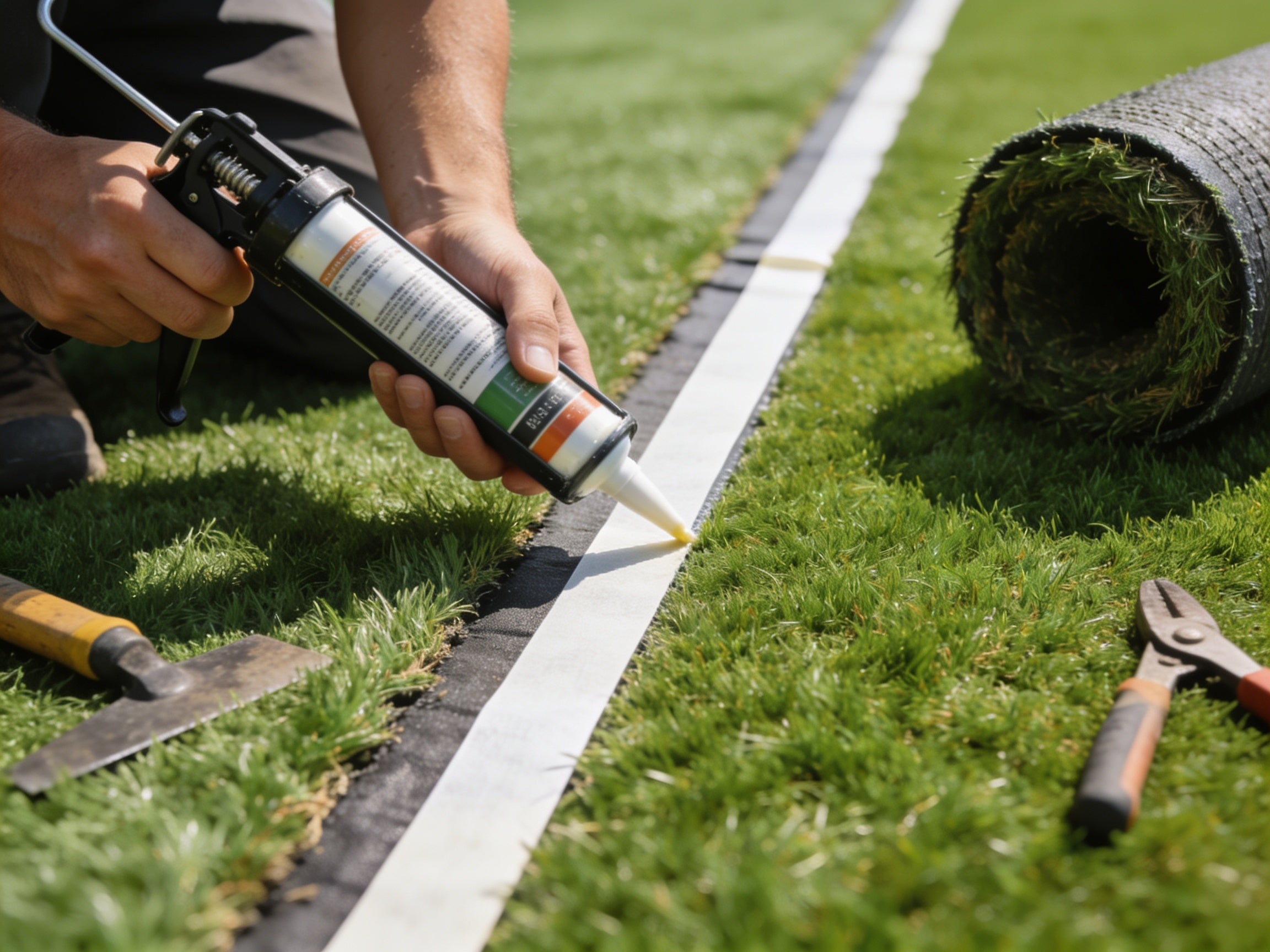
- Seam count. Standard turf rolls run 12 to 15 feet wide. Irregularly shaped yards need more seams, more seaming tape, and more labor hours — a curved yard costs more than a rectangle of the same square footage.
- Access. If a crew can't get equipment to the backyard without hand-carrying every bag of base material through a side gate, budget extra labor hours.
The honest trade-off: artificial turf costs more upfront than sod ($2,000–$5,000 for the same area) but eliminates water, mowing, and fertilizer for 10 to 15 years. In hot, dry climates the water savings alone close that gap in five to seven years. In cooler, wetter regions, the payback period stretches out — factor that into your decision, don't just chase the "no mowing" pitch.
Pairing Turf With Hardscaping and Planters
Turf looks most expensive — and most realistic — when it's framed, not just laid flat.
Edging is not optional. Steel, aluminum, or composite edging holds the seam line crisp against pavers, mulch beds, or gravel. Skip it and infill migrates, edges fray, and the whole install looks cheap within a year.
Raised planters do double duty. They break up a flat expanse of green, give you a place for real plants (herbs, seasonal color, small shrubs) without fighting turf for water and sun, and hide irrigation lines you still need for the planted beds around your synthetic lawn.
Contrast the texture. Pair turf with a material that reads differently under light — decomposed granite, large-format pavers, or dark mulch. Turf next to turf-colored anything looks flat and fake; turf next to a contrasting hard surface looks designed.
Lighting sells the space at night. Low-voltage path lights along the turf edge or uplighting on a nearby planter turns a daytime lawn feature into a usable evening space — a detail that costs under $200 in fixtures but changes how the whole yard reads.
The Upkeep Routine Nobody Mentions in the Brochure
"Zero maintenance" is a myth used to close a sale. Real maintenance is minimal, but it's not zero — and skipping it is why some installs look tired after two summers while others still look sharp after ten.
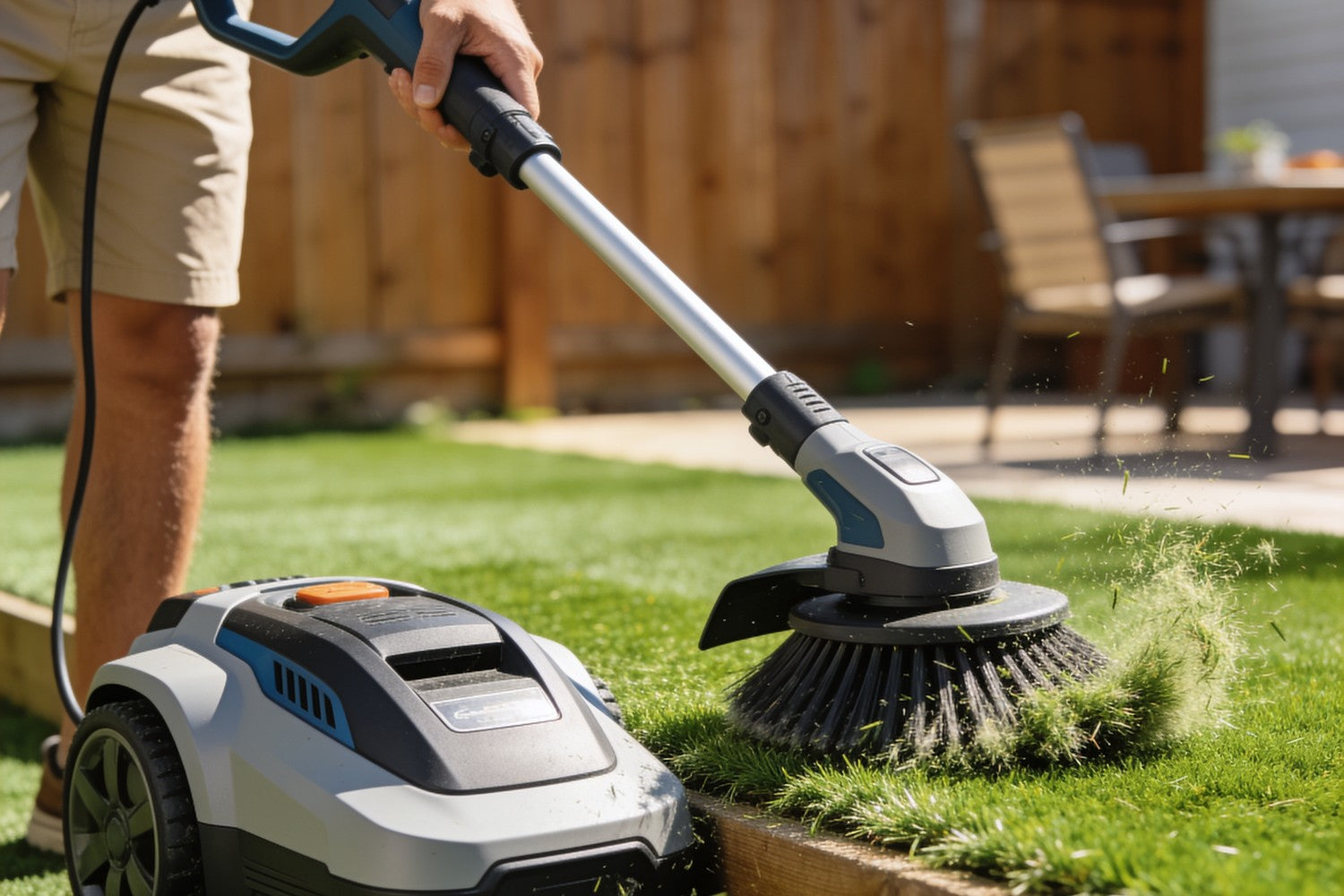
Brush against the grain, monthly. Foot traffic mats fibers down over time. A stiff-bristle push broom or a dedicated power brush lifts the pile back to standing upright. This is the single highest-leverage thing you can do for how "real" the turf looks.
Rinse debris weekly in high-pollen or high-shed seasons. A garden hose clears dust and pollen that would otherwise settle into the infill and dull the color.
Deep-groom quarterly. This is where a purpose-built power sweeper earns its keep. Our TurfoMax runs a 13-amp motor through a DuoHelix brush across a 15-inch path, self-propelled — it lifts matted fibers and pulls out embedded debris that a hand broom can't reach, in a fraction of the time.
Spot-treat pet zones weekly. Rinse urine spots immediately and treat with an enzyme cleaner monthly if you have dogs. This single habit prevents 90% of the odor complaints that make homeowners regret going synthetic.
Skip all of this and turf still looks fine for a season. Keep it up and it looks new for a decade — that's the actual math behind the "15-year lifespan" claim on every product page.
DIY vs. Hiring a Landscaper
DIY makes sense when: your yard is flat, under 500 square feet, and rectangular or close to it. Budget a full weekend, a rented plate compactor, and expect to spend roughly the materials cost plus 20% for tools and inevitable mistakes. Renting a compactor and edge trimmer runs $80 to $150 for the day.
Hire a pro when: you're dealing with slope, drainage work, curved beds, or anything over 800 square feet. Professional crews carry the base-compaction equipment and seaming tools that make the difference between a lawn that looks installed and one that looks patched. Expect to pay the full $7–$20 per square foot rate, but you're buying a base that won't settle unevenly in year two.
If you maintain multiple properties or run a landscaping business, the math flips: buying your own commercial-grade equipment pays for itself fast. Our Pro Series runs a Briggs & Stratton CR950 208cc engine — built for crews grooming synthetic turf across multiple job sites in a day, not homeowners doing one yard once.
The Bottom Line
Artificial grass landscaping earns its cost when you match the layout to your actual yard, budget for the real per-square-foot number instead of the lowest one you saw online, and treat the five-minute-a-week maintenance as part of the deal, not an afterthought. Do that, and you get a yard that looks sharp in July and January alike, with no mower, no fertilizer bill, and no brown patches.
Ready to gear up for the upkeep side of the equation? Browse our full lineup of turf maintenance equipment built to keep synthetic lawns looking new for years, not seasons.