What's the Best Artificial Turf Sweeper for Your Yard?
The best artificial turf sweeper for your yard comes down to three numbers: motor power, RPM, and brush width — matched to how big your lawn is and how much traffic it takes. Get those three right and a sweeper fixes matting in one pass instead of five. Get them wrong and you've bought an expensive way to push dirt around.
Here's exactly how to match the machine to your yard, and which GreenSweep model handles which job.
What an Artificial Turf Sweeper Actually Does
An artificial turf sweeper isn't a broom with a motor bolted on. It's built to do one job a broom and a leaf blower both fail at: lift flattened turf fibers back upright while pulling debris out of the pile in a single pass. A broom just drags leaves and grit across the surface. A leaf blower shoves debris deeper into the infill instead of removing it. A dedicated sweeper uses a rotating brush to agitate the fibers from the base, loosen embedded dirt and pet hair, and pull it all into a collection bag or bin.
Skip this step and your turf pays for it. Matted fibers trap moisture underneath, which is exactly what causes odor and mold. Debris left in the pile breaks down infill drainage over time. A sweeper run every one to two weeks is what keeps synthetic grass looking like it did on installation day instead of a worn-out carpet.
Corded vs. Cordless: Which Type Fits Your Yard
The power source decides how you'll actually use the machine, not just how it runs.
Corded electric gives you unlimited runtime for a flat monthly cost of zero extra batteries. TurfoMax runs on a 13-amp motor with no charge cycle to plan around — plug in and go until the job's done. The tradeoff is cord management: you're working around an extension cord the whole time, which slows you down on yards with a lot of obstacles (patio furniture, planters, fencing).
Cordless battery-powered sweepers trade unlimited runtime for total freedom of movement. TurfoVolt runs on two G-Core 4Ah batteries for a 40-minute runtime at 2,500 RPM — enough for most residential yards in one charge, with a spare battery ready if you're covering more ground. No cord means no snags, no tripping hazards on wet turf, and no limit on where you can push the machine.
Rule of thumb: if your yard is under roughly 2,000 sq ft and has easy outlet access, corded is cheaper and simpler. If your yard is large, has multiple zones, or you just don't want to fight a cord around furniture, cordless wins every time.
Motor Power, RPM, and Brush Width — What the Specs Mean
Every listing throws numbers at you. Here's what they actually change about performance:
- Motor power (amps or watts): This drives how much resistance the brush can push through. A 12-amp motor struggles on dense, high-pile turf or heavy debris load; 13+ amps (like TurfoMax) or 1,600W+ corded competitors handle it without stalling.
- RPM (brush rotation speed): This is the number that actually lifts matted fibers. Low-RPM machines (under 1,000 RPM) mostly just push debris around — fine for light dusting, useless for real matting. TurfoVolt's 2,500 RPM and TurfoMax's DuoHelix brush design are built specifically to stand fibers back up, not just skim the surface.
- Brush width: This is your coverage speed, not your cleaning quality. TurfoMax's 15"/380mm brush clears a standard backyard in a reasonable number of passes. Wider brushes (18"–22", like commercial units) cut time on large properties but cost more and weigh more to maneuver.
The mistake most buyers make: they shop on brush width alone because it's the easiest number to compare, then wonder why a wide, low-RPM machine still leaves their turf looking flat. RPM and brush design determine whether the sweeper actually fixes matting. Width just determines how long it takes.
Matching Sweeper Size to Yard Size and Turf Density
Match the machine to the job, not the other way around:
- Small patios and balconies (under 500 sq ft): A manual turf rake like the AstroComb handles light debris fine — you don't need a powered machine for this footprint.
- Standard residential yards (500–3,000 sq ft): TurfoMax's corded 13-amp motor and 15" brush is the sweet spot — enough power to lift matting, self-propelled so you're not muscling it across the lawn.
- Large yards, multiple zones, or heavy pet/kid traffic: TurfoVolt's cordless freedom means you're not dragging a cord through gates or around play equipment, and 2,500 RPM handles the higher debris load these yards see.
- Landscapers and commercial properties: Pro Series' Briggs & Stratton CR950 208cc petrol engine is built for volume — multiple properties per day, no outlet dependency, no battery swaps mid-job.
Turf density matters too. Denser, higher-pile turf (common on premium residential installs) needs more RPM and a stiffer brush to actually reach the base of the fibers. Lower-pile commercial or sports turf clears faster with less aggressive settings.
One more variable buyers overlook: slope and surface transitions. A yard with raised beds, steps, or uneven grading needs a lighter, more maneuverable unit you can angle and lift easily — a heavy petrol machine is overkill and awkward on anything but flat, open ground. If your property is mostly flat with wide open runs, weight matters less and raw power matters more.
TurfoMax vs. TurfoVolt vs. Pro Series: Which One's Right for You
| Model | Power | Key Spec | Best For | Price |
|---|---|---|---|---|
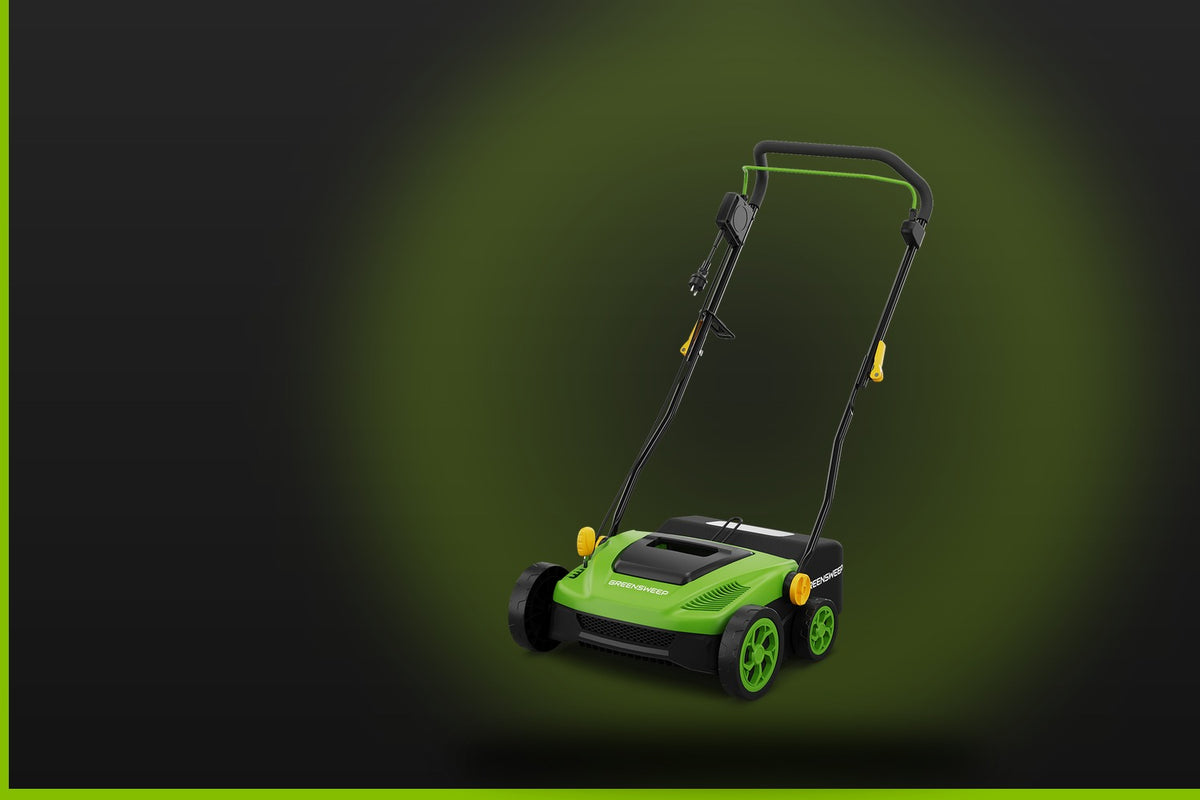
| TurfoMax | Corded electric | 13-amp, DuoHelix brush, 15"/380mm, self-propelled | Standard residential yards, no cord hassle with unlimited runtime | $249 |
| TurfoVolt | Cordless battery | 2x G-Core 4Ah batteries, 40-min runtime, 2,500 RPM | Large yards, multi-zone properties, pet/kid-heavy turf | $399 |
| Pro Series | Petrol | Briggs & Stratton CR950 208cc | Landscapers and multi-property commercial routes | $899 |
If you're maintaining one home and want the lowest cost per clean with zero battery management, TurfoMax is the call. If your yard is big enough that a cord becomes a liability, or you're moving between separate turf areas (front yard, backyard, side patio), TurfoVolt pays for itself in saved time. If you're running a route across multiple properties in a day, Pro Series is the only option built for that volume — everything else on this list is sized for a single yard.
Keeping Your Sweeper (and Your Turf) in Top Shape
The machine only performs as well as you maintain it:
- Clear the brush after every session. Wrapped grass fibers, string, or pet hair around the brush core kill RPM and strain the motor.
- Empty the collection bag before it's full. A packed bag reduces suction and debris pickup on your last few passes.
- Check for hard debris before you start. Rocks, toys, and sprinkler heads can damage brush bristles or jam the motor — a quick walk-through before you sweep saves a repair bill.
- Charge cordless batteries fully between uses. Partial charges shorten battery lifespan over a season; keep a spare G-Core battery on hand if you're covering more than one zone per session.
- Run it on a schedule, not just when it looks bad. Every one to two weeks prevents the deep matting that takes multiple passes to fix.
A turf sweeper that's clogged, dull, or half-charged won't lift fibers no matter how good the spec sheet looked in the store.
Bottom Line
The right artificial turf sweeper comes down to three numbers — motor power, RPM, and brush width — matched to your yard's actual size and traffic. Skip the guesswork: for most residential yards, TurfoMax delivers the power and RPM to fix matting without cord headaches for larger properties, and TurfoVolt gives you the freedom to cover more ground. Whichever you pick, run it on a schedule and your turf stays looking freshly installed year-round.